Last Updated: November 17, 2026
Quick Summary
The diamond cut vs powder coated wheels pros and cons come down to shine versus resilience: diamond cut gives a bright machined face but thin lacquer that corrodes once chipped, while powder coating offers a sealed colour coat with better chip and salt resistance. Choose diamond cut for leased or show cars, powder coating for daily drivers.
- Diamond cut wheels are standard alloys skimmed on a lathe to expose bare aluminium, then lacquered.
- Powder coating is baked on in an oven as a coating over bare metal.
- Each diamond cut refurbishment removes metal, so the finish has a repair limit.
- Leased car, keep it diamond cut; owned daily driver, powder coating usually wins over five years.
- Wash wheels weekly in winter to clear road salt, rinsing barrels as well as faces.
Table of Contents
- Diamond Cut vs Powder Coated Wheels at a Glance
- Diamond Cut Alloy Wheels Pros and Cons
- Powder-Coated Alloy Wheels Pros and Cons
- How to Identify Diamond Cut Wheels on Your Car
- Diamond Cut Wheel Refurbishment: Limits, Costs and Kerb Damage
- Durability, Lacquer Failure and Looking After Either Finish
- Which Finish Suits Your Car and Driving?
- Get a Free Quote for Your Kerbed or Corroded Alloys
- Frequently Asked Questions
Diamond Cut vs Powder Coated Wheels at a Glance
Choosing between diamond cut and powder coated wheels comes down to one trade-off: showroom shine versus long-term resilience. Diamond cut wheels wear a bright machined face that catches light beautifully but exposes bare metal to the elements. Powder coated wheels carry a thicker, sealed colour coat. This guide breaks down the diamond cut vs powder coated wheels pros and cons so you can pick the right finish for your car, your budget and your parking habits.
Comparison Table: Finish, Durability and Repair
| Feature | Diamond Cut | Powder Coated |
|---|---|---|
| Appearance | Bright machined face, two-tone | Solid colour, gloss or satin |
| Durability | Good until lacquer fails | Better chip and salt resistance |
| Kerb damage | Repairable, limited times | Repairable, easier to blend |
| Corrosion risk | Higher once lacquer lifts | Lower, fully sealed |
| Cost | Higher per wheel | Usually lower per wheel |
| Best for | Show cars, leased vehicles | Daily drivers, winter use |
Diamond Cut Alloy Wheels Pros and Cons
Diamond cut alloy wheels are standard alloy wheels that have had their face skimmed on a lathe to expose bare aluminium, then lacquered. The result is that mirror-bright machined face against darker painted spokes, a two-tone look most premium manufacturers fit as standard.
Pros of diamond cut alloy wheels:
- Striking, factory-original appearance that suits modern cars
- Keeps a leased vehicle looking as the manufacturer intended
- The machined face reflects light and hides minor swirl marks
Cons of diamond cut alloy wheels:
- The lacquer is thin over bare metal, so a single stone chip lets water in
- Once water gets under the lacquer, milky white corrosion spreads
- Each refurbishment removes metal, so the finish has a repair limit
Diamond cut wheels are not fragile, they are simply less forgiving. If you want the deeper step-by-step detail on how the finish is restored, our guide on how to repair diamond cut alloy wheels walks through the process.
Powder-Coated Alloy Wheels Pros and Cons
Powder-coated alloy wheels are blasted back to bare metal, primed, then coated in a dry powder that is baked on in an oven. The finish is applied as a coating over the bare metal.
Pros of powder-coated alloy wheels:
- Full colour choice, from gloss black to satin grey or bronze
Cons of powder-coated alloy wheels:
- Loses the bright machined sparkle some buyers want
- A heavy kerb strike can chip the coating down to the metal
- Colour can fade on cheaper powders after years of UV exposure
If it is a leased car heading back to the dealer, matching the original diamond cut finish usually matters more.
How to Identify Diamond Cut Wheels on Your Car
You can identify diamond cut wheels by looking for a bright silver face with fine concentric machining lines, contrasting with darker painted or powder coated inner spokes. Run a fingertip across the face: a machined finish feels slightly ridged, while powder coating feels smooth and uniform.
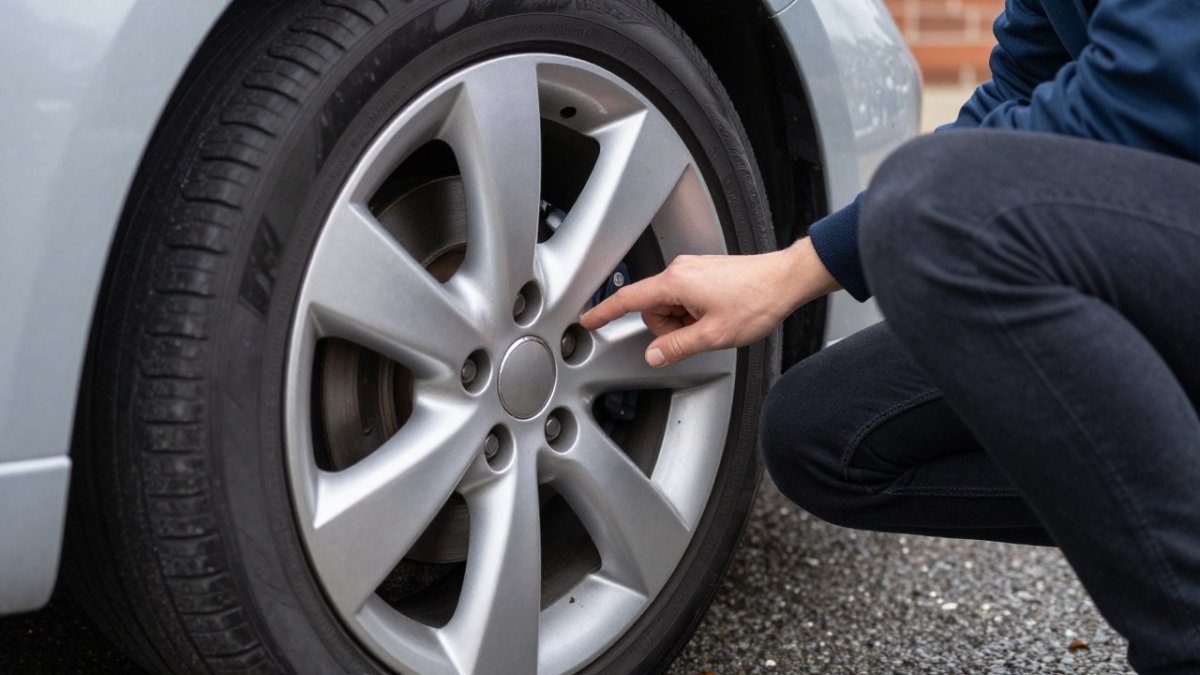
A few quick checks settle it:
- Look for a two-tone effect where the face is brighter than the sides
- Check for a visible lacquer edge where the machined face ends
- Milky white patches or lifting lacquer are classic diamond cut corrosion
- On the inner barrel, a sticker or stamp often names the original finish
If you are unsure, send a photo when you request a quote. We can usually tell from a clear image whether a wheel is machined or coated, and that changes both the repair method and the price.
Diamond Cut Wheel Refurbishment: Limits, Costs and Kerb Damage
Diamond cut wheel refurbishment is possible, but only a limited number of times. Each re-cut removes a thin layer off the face, and there is a limit to how much metal can come off before the wheel is no longer safe to machine.
That limit matters. A wheel that has already been re-cut twice may have no material left to machine again.
How the re-cut limit works in practice
Diamond cutting removes a controlled skim from the machined face to expose fresh aluminium. Every cut reduces the thickness of the face and the depth of the spoke edges. The exact limit depends on the original design, how much was removed on previous cuts and how deep the kerb damage is.
Always ask how much material is being removed and whether the wheel has been cut before.
Kerb damage: what can and cannot be re-cut
Deep gouges that reach the spoke edge, or damage that has distorted the lip, may not be fixable by machining alone.
Repair options and realistic costs after kerb damage
There are three practical routes after kerb damage, and the right one depends on the depth of the damage and the value of the wheel:
- Local spot repair suits light scuffs and small lacquer chips.
- Full-wheel refurbishment suits corrosion that has spread across the face or damage on more than one spoke.
- Replacement is the right answer when the wheel is cracked, bent, below safe thickness or already at its re-cut limit.
Prices depend on wheel size, finish and damage, so ask for a quote based on a clear photo.
For kerbed or corroded diamond cut wheels, our mobile diamond cut alloy wheel repair service is available at your home or workplace. If you want the deeper step-by-step detail on how the finish is restored, our guide on how to repair diamond cut alloy wheels walks through the process.
Durability, Lacquer Failure and Looking After Either Finish
Lacquer failure can shorten the life of diamond cut wheels. The clear coat over the machined face is thin, and once it chips, water and road salt can creep underneath.
How to inspect your wheels before choosing a repair
Before you book anything, work out what you are actually looking at. A practical inspection checklist:
- Lacquer corrosion shows as milky white patches or a cloudy haze under the clear coat, often starting at the edge of the machined face or around a stone chip. The metal underneath may still be sound.
- Kerb damage is physical loss of material, usually on the outer lip or spoke edge. Run a fingertip around the rim: a machined face feels slightly ridged, while powder coating feels smooth and uniform, and a kerbed edge feels rough or stepped.
- Coating wear on powder coated wheels appears as dulling, fading or small chips, often on the spokes and barrel rather than the face.
- Structural damage is different again: cracks, bends, flat spots or a wheel that will not hold pressure. These are safety issues, not cosmetic ones.
If you are unsure, send a photo when you request a quote. We can usually tell from a clear image whether a wheel is machined or coated, and that changes both the repair method and the price.
Finish-specific care
Looking after either finish comes down to a routine matched to the coating:
-
Wash wheels weekly in winter to clear road salt, and rinse the barrels as well as the faces.
-
Treat chips early before corrosion sets in, and touch in small chips where the finish allows.
-
Apply a wheel sealant to both finishes for an easier clean and a sacrificial layer against salt.
-
Avoid kerbing by leaving extra clearance when parking and using mirrors rather than judgment alone.
Expected lifespan and what affects it
Lifespan is not fixed and depends on climate, use, preparation quality and how quickly chips are treated.
Safety: cosmetic versus structural
Separate finish problems from structural ones. Milky lacquer, fading and light scuffs are cosmetic. Cracks, bends, flat spots and wheels that lose pressure are structural and need professional inspection or replacement, not a re-cut or a powder coat. If a wheel has been re-cut to its limit or shows any of those structural signs, replacement is the safe answer.
If lacquer has already lifted or kerb damage is spreading, our kerbed alloy wheel refurbishment service may be able to help. For prevention, our guide on the best ways to prevent kerb damage to alloy wheels covers the habits that save most wheels.
Which Finish Suits Your Car and Driving?
Match the finish to how you actually use the car, not to what looks best in a showroom.
Choose diamond cut if:
- Your car is leased and must go back looking factory-standard
- It is a weekend or show car kept garaged
- You want the original two-tone look the manufacturer fitted
Choose powder coating if:
- The car is a daily driver on gritted winter roads
- You park on tight streets where kerb scuffs are likely
- You want a custom colour or the lowest long-term upkeep
A useful rule: leased car, keep it diamond cut. Owned daily driver, powder coating usually wins on cost and resilience over five years.
Get a Free Quote for Your Kerbed or Corroded Alloys
SMART Automotive is a mobile service, so we repair kerbed and corroded alloys at your home or workplace, with most jobs completed in one to three hours. Our 18 technicians average 23 years' experience, we are ISO 9001, 14001 and 27001 registered, and our bodywork carries a lifetime guarantee. We offer same-day quote response.
Send us a photo of the damage and we will tell you whether a re-cut, a powder coat or a replacement is the honest answer. Contact SMART Automotive Hampshire by phone, WhatsApp or email to get started.
Kerb damage and lacquer failure only get worse with every wet winter, and the repair rarely costs as much as drivers fear. Get in touch with SMART Automotive and we will assess your wheels, confirm whether a diamond cut re-cut or a powder coat is the right fix, and restore a factory-standard finish at your home or workplace. With mobile service, one-to-three-hour repairs and a lifetime bodywork guarantee, you can have your alloys looking right without losing a day to a bodyshop.
Frequently Asked Questions
Are powder-coated wheels more durable than diamond cut wheels?
Powder coating and diamond cut each have different strengths. Diamond cut wheels have a thin lacquer over a machined face, and once that lacquer is chipped, water can get in and the exposed alloy can corrode.
How many times can diamond cut wheels be refurbished?
Each refurbishment removes a thin layer of alloy to re-machine the face, and there is a limit to how much material can safely come off before the wheel weakens.
Can diamond cut wheels be powder-coated instead?
Changing a diamond cut wheel to a different finish is a question to raise when you request a quote, so the options for your specific wheel can be discussed.
How can I tell whether my alloy wheels are diamond cut or painted?
Look at the face in daylight. Diamond cut wheels have a bright, mirror-like silver face with a subtle machined grain, usually contrasted against darker painted inner spokes. Run a finger across the surface: a machined face feels flat and slightly textured, while paint feels smooth and uniform. If the lacquer is peeling in white, milky patches along the edges, that is a strong sign of a diamond cut finish breaking down.
