
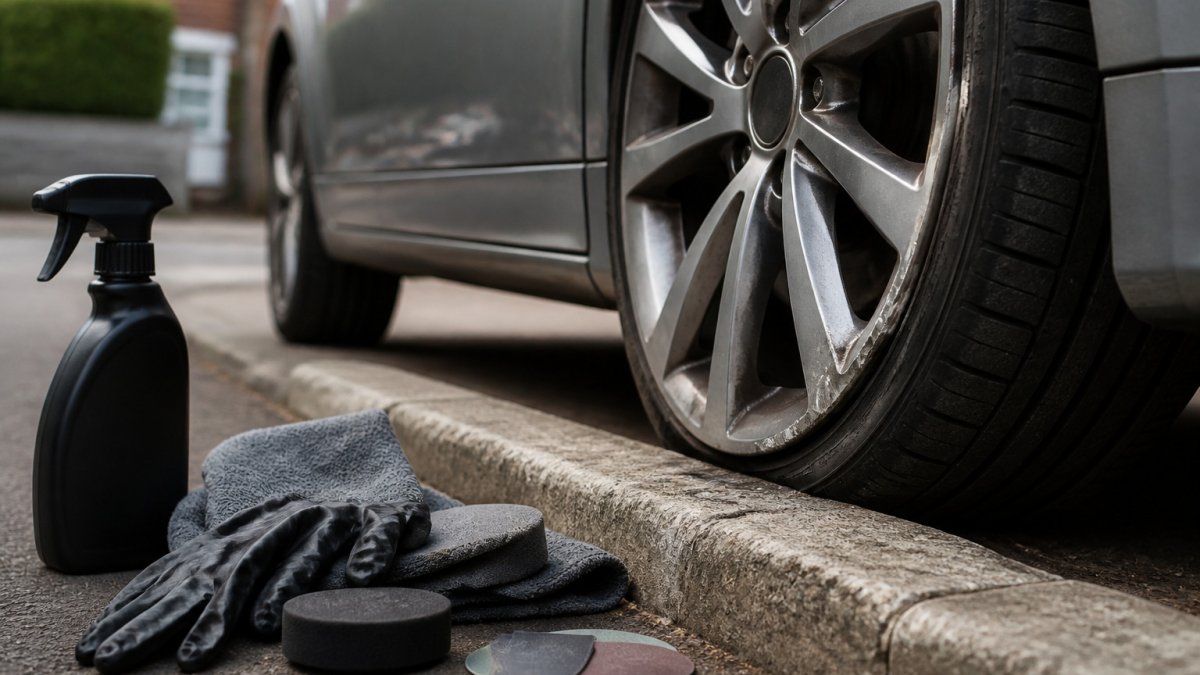
Quick Summary
To prevent kerb damage, fit alloy wheel rim protectors, choose tyres with a rim-protector ridge, and change how you park by leaving more room and turning the wheels away from the kerb. Regular cleaning with a wheel-safe product also helps protect the finish, and a sealant or coating adds a further layer of defence.
- Fit clip-on or adhesive rim protectors, checking fitment against your exact wheel before buying.
- Stop roughly 30 centimetres from the kerb when parallel parking rather than rolling in close.
- Turn the wheels away from the kerb before reaching it so the outer face takes any contact.
- Clean wheels with a pH-neutral cleaner labelled safe for alloys, every one to two weeks in winter.
- Treat exposed aluminium promptly after a kerb strike, before corrosion can spread under the finish.
Table of Contents
- Why Kerbs Scuff Alloy Wheels So Easily
- 1. Fit Alloy Wheel Rim Protectors
- 2. Choose Tyres With Rim Protection
- 3. Learn How to Avoid Kerbing Alloy Wheels When Parking
- 4. Clean Alloy Wheels Regularly With Wheel-Safe Products
- 5. Apply a Protective Sealant or Coating
- 6. What to Do After a Kerb Strike and Alloy Wheel Scratch Repair
- Booking Your Mobile Alloy Wheel Check With SMART Automotive
- Frequently Asked Questions
Why Kerbs Scuff Alloy Wheels So Easily
Last Updated: November 2, 2026
Kerb damage is one of the most common reasons drivers in the UK end up paying for alloy wheel repairs.
Alloy wheels are made from aluminium, which is softer than the steel used in older wheel designs.
Several factors make the problem worse. Low-profile tyres leave less sidewall between the rim and the kerb, so the wheel edge takes more of the impact.
The contrast with other damage is worth noting.
1. Fit Alloy Wheel Rim Protectors
Rim protectors are one of the most direct ways to prevent kerb damage. These are physical strips or guards that fit along the outer edge of the wheel and absorb contact before it reaches the alloy.
Rim protectors are sold by a range of manufacturers, so compare products carefully and check the manufacturer's site for fitment details before buying.
Rim protectors work best when they are installed on a clean, dry wheel and checked periodically for loosening.
Choosing protectors that fit your wheel and tyre
Fit is the most important factor. A protector that is too thick can interfere with the tyre bead or the brake caliper clearance, while one that is too thin will not absorb much impact. Measure the rim diameter and width before ordering, and confirm the product lists compatibility with your wheel size.
Compatibility, installation and safety limitations
Rim protectors are not a universal fix. Before you buy, work through these checks, they are the difference between a protector that stays put and one that works loose or rubs.
- Rim profile and lip shape. Protectors are designed around a particular rim lip profile. A deep-dish wheel, a diamond-cut face or a wheel with a pronounced outer flange may not accept a clip-on design cleanly. Check the manufacturer's fitment list against your exact wheel code, not just the diameter.
- Tyre bead clearance. A clip-on protector sits between the tyre bead and the rim flange. If the bead seat is tight or the tyre has a reinforced sidewall, the protector can prevent the bead seating properly. That is a safety issue, not a cosmetic one, a poorly seated bead can lead to slow air loss.
- Brake calliper clearance. On some vehicles, particularly those with large brake packages or close-fitting wheels, an add-on protector can reduce clearance to the calliper. Spin the wheel by hand after fitting and check for contact before driving.
- Adhesive vs clip-on trade-offs. Adhesive strips are quicker to fit and suit wheels where a clip-on will not seat, but they rely on surface preparation and can lift at the ends over time. Clip-on designs are more secure but demand correct sizing and careful installation to avoid damaging the lacquer.
2. Choose Tyres With Rim Protection
Tyres are another line of defence. Some tyres are built with a reinforced rim-protector ridge along the sidewall, a raised rib of rubber that sits slightly proud of the wheel edge.
Rim-protection tyres are one option alongside physical rim guards, so this is worth considering when you next replace your tyres.
Keep in mind that a rim-protector ridge will not eliminate kerb damage entirely, particularly at speed or on steep kerb faces. It reduces the risk rather than removing it.
3. Learn How to Avoid Kerbing Alloy Wheels When Parking
Most kerb damage happens during parking, so changing how you park is one of the cheapest prevention methods available. A few practical habits make a real difference.
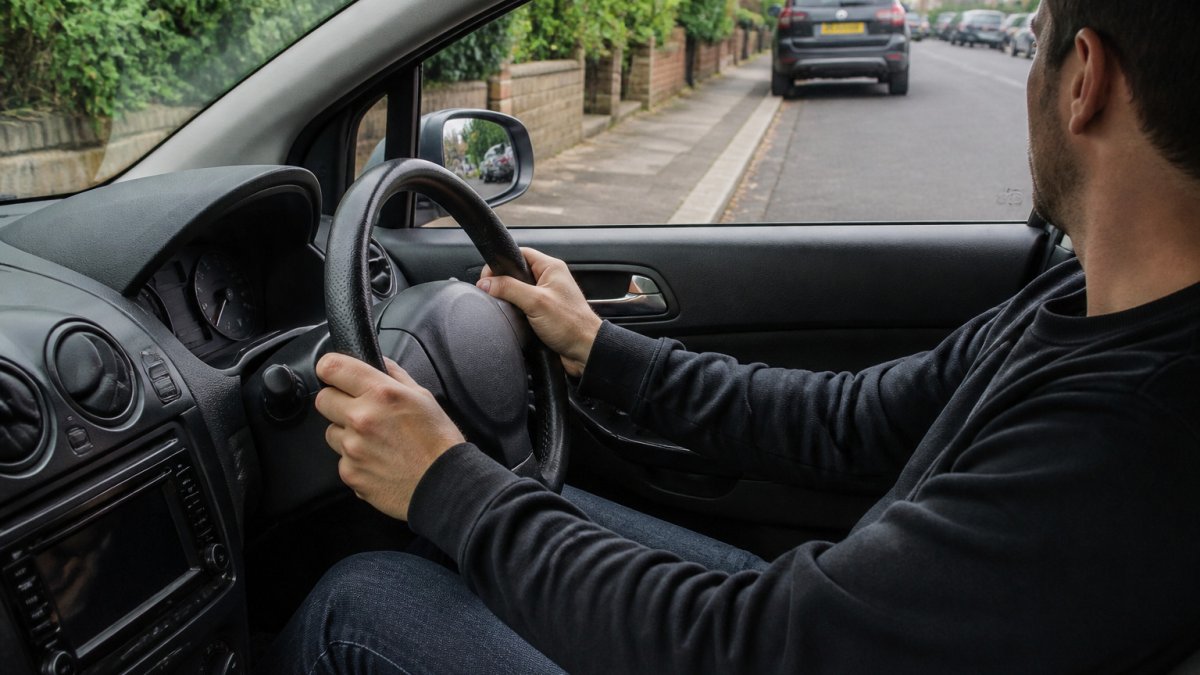
- Leave more room than you think. Stop roughly 30 centimetres from the kerb when parallel parking, rather than rolling in close.
- Turn the wheels away from the kerb before you reach it, so that if the tyre does brush the edge, the outer face of the wheel takes the contact.
- Use your mirrors and parking sensors if the car has them, and check the front and rear wheels separately.
- Reverse slowly. Most scuffs happen during low-speed manoeuvres, where drivers stop watching the kerb.
- Ask a passenger to guide you when the space is tight and the kerb is high.
Watch out: over-correcting when you turn the wheel can push the rear wheel into the kerb. Make small, steady steering inputs and check the clearance as you go.
Judging wheel-to-kerb distance with your mirrors
The single most useful skill is learning to read the gap in your door mirrors. Most drivers look at the kerb through the side window, which gives a poor sense of depth. Instead:
- Dip the passenger mirror before you start a parallel park. Many cars have a mirror-dip function on reverse; if yours does not, adjust it manually so you can see the rear wheel and the kerb edge in the same view.
- Use the mirror as a reference, not a guess. Watch the gap between the rear tyre's contact patch and the kerb line. If the gap is closing faster than you expect, stop and pull forward to reset.
- Check both axles. The front wheel tracks a tighter line than the rear when you turn, so a gap that looks fine at the front can close at the back. Glance at the rear mirror as the car straightens.
Using parking sensors and cameras properly
Parking sensors are a guide, not a guarantee. They are typically tuned to detect larger objects and may not pick up a low kerb edge, especially on a high pavement or where the kerb is chamfered. Treat a continuous tone as a prompt to stop and look, not as confirmation that you are clear. Rear cameras help with the kerb line but distort distance at the edges of the frame, so cross-check with the mirrors.
A repeatable parallel-parking routine
- Pull alongside the car in front, roughly a mirror's width away, and line up your rear wheels with theirs.
- Reverse slowly with the wheel turned towards the kerb until you are at about 45 degrees.
- Straighten the wheel and continue back until your front wheel clears the car in front.
- Turn away from the kerb to bring the front in, checking the passenger mirror throughout.
- Stop when you are roughly 30 centimetres from the kerb, then straighten up with small inputs.
When the space is too tight
Narrow streets, high kerbs and tight bays are where most scuffs happen. If the gap looks marginal, choose a different space or park further from the kerb and accept a slightly wider stance. On steep or chamfered kerbs, the wheel edge is closer to the contact point than it appears from the driver's seat, so err on the side of more clearance.
4. Clean Alloy Wheels Regularly With Wheel-Safe Products
Regular cleaning does more than keep wheels looking good. Brake dust, road salt and moisture can attack the protective finish over time.
Use a pH-neutral wheel cleaner that is labelled as safe for alloys. Strong acid or alkaline cleaners can strip the lacquer and leave the metal exposed.
A reasonable routine is to clean your wheels every one to two weeks in winter, and at least monthly in summer. Frequent cleaning removes the grit and salt that can dull the surface and make scuffs harder to spot.
5. Apply a Protective Sealant or Coating
Sealants and ceramic coatings create a sacrificial layer over the wheel finish.
A coating is not a substitute for a physical rim protector. It helps against chemical and environmental wear, but it offers little protection against a hard kerb strike.
Coatings are typically applied to clean, dry wheels, and the manufacturer's curing instructions should be followed closely. Sealants generally need reapplying more often than ceramic coatings, so check the product's guidance on durability.
6. What to Do After a Kerb Strike and Alloy Wheel Scratch Repair
Even with precautions, kerb strikes happen. What you do next determines whether the damage stays cosmetic or turns into corrosion.
First, inspect the wheel in good light.
For cosmetic scuffs, prompt action matters. Clean the area, and if the metal is exposed, treat it before it oxidises.
Repair options depend on the extent of the damage. Light scuffs may only need minor touch-up work.
Realistic costs and value over time matter here.
| Step | What to do | Timing or note |
|---|---|---|
| Inspect the wheel | Check in good light for scuffs through the lacquer | Exposed metal needs treating |
| Check for structural damage | Look for bends, cracks, tyre bead or sidewall damage | Inspect before driving further if bent |
| Treat exposed metal | Clean the area and treat it before it oxidises | Waiting months lets corrosion spread |
| Choose repair level | Touch-up for light scuffs; refinishing for deeper gouges | Deeper gouges usually need professional work |
| Get a quote | Ask for a written quote before booking | Know the cost in advance |
Booking Your Mobile Alloy Wheel Check With SMART Automotive
If you have already kerbed an alloy, a professional check will show how far the damage goes. SMART Automotive provides mobile cosmetic repairs for alloy wheels, bumper scuffs, scratches and dents, carried out at your home or workplace with a factory-standard finish. Repairs are completed in 1-3 hours, and SMART Automotive offers a lifetime bodywork guarantee.
Not sure whether your kerbed wheel needs professional work?
Ready to book? Get your free repair quote and we will confirm a price for your damage.
Frequently Asked Questions
Can kerb rash be fixed on alloy wheels?
Light kerb rash on an alloy wheel can often be repaired by a professional using refinishing techniques that match the original finish. Deeper gouges may need the wheel to be refurbished or, in severe cases, replaced. Acting quickly helps, because scuffs left exposed can allow corrosion to start around the damaged metal. SMART Automotive offers mobile alloy wheel repair at home or work, and the team can assess the damage and explain your options before any work begins. Visit the website for current pricing or to request a quote.
Do rim protectors prevent kerb damage to alloy wheels?
Rim protectors reduce the chance of scuffs by putting a sacrificial barrier between the wheel edge and the kerb. They do not make a wheel immune to damage, and a hard or high-speed contact can still mark the wheel. Fitment matters: a protector must suit your wheel diameter, rim width and tyre profile, and some designs need fitting with care to avoid interfering with the tyre bead or wheel balance. Check the manufacturer's compatibility guidance before buying, and consider how often you park against kerbs.
How can I avoid scraping my alloy wheels when parking?
Leave a clear gap from the kerb when you pull in, and approach it at a shallow angle rather than straight on. Use your mirrors and, where fitted, parking sensors, but remember that sensors do not always detect a low kerb edge. When reversing, turn the steering wheel away from the kerb before you reach it. Practise in an empty car park if you are unsure of your car's wheel clearance. These habits cost nothing and prevent most kerb strikes.
How should I clean alloy wheels without damaging them?
Use a wheel-safe cleaner designed for alloys, and avoid acidic or harsh abrasive products that can dull or etch the finish. Rinse off road salt and grime regularly, especially in winter, because left-on salt speeds up corrosion. Use a soft brush or microfibre mitt and rinse thoroughly. Avoid cleaning hot wheels in direct sun, as this can leave residue. A regular routine is easier to maintain than occasional deep cleaning.
