Quick Summary
Smart repair is a localised cosmetic technique where technicians sand, fill, prime and recolour only the damaged area, then blend the new paint into the panel. It suits deeper or multi-panel scratches, while DIY kits only handle faint clear-coat marks. The right choice depends mainly on scratch depth, the car's value and how much your time is worth.
- Clear-coat scratches that do not catch a fingernail can usually be polished at home.
- Colour-coat scratches often need a colour-matched smart repair, especially on metallic paints.
- Primer or bare-metal scratches should go to a professional rather than a DIY pen.
- A DIY touch-up pen can leave a raised blob that looks worse than the original scratch.
- Compare quotes on whether they include blending and what guarantee applies.
Table of Contents
- Smart Repair and DIY Paint Repair at a Glance
- How to Assess Scratch Depth Before You Choose
- How to Remove Scratches from Car Paint Yourself
- Car Scratch Repair Kit Limits and Risks
- Car Scratch Repair Cost: Smart Repair vs DIY
- When Professional Car Scratch Repair Is the Better Choice
- Booking Your Repair or Lease Return Check With SMART Automotive
- Frequently Asked Questions
Smart Repair and DIY Paint Repair at a Glance
Last Updated: October 30, 2026
Smart repair and DIY paint repair for scratches solve the same problem in very different ways. DIY repair means buying a kit and working on the panel yourself. The choice usually comes down to how deep the scratch is, how much the car is worth, and how much your time is worth.
Smart repair is a localised cosmetic technique. Technicians sand, fill, prime and recolour only the damaged area, then blend the new paint into the surrounding panel. DIY repair uses a kit or a polishing product that you apply by hand. Both aim to make a scratch less visible, but they differ sharply in finish quality, risk and cost.
| Factor | Smart repair (professional) | DIY repair |
|---|---|---|
| Typical scope | Scuffs, scratches, dents, kerbed alloys | Light clear-coat marks only |
| Finish quality | Colour-matched, blended finish | Varies with skill and product |
| Risk of making it worse | Low, handled by trained technicians | Moderate, especially on deep scratches |
| Your time | Usually completed in 1 to 3 hours on site | Several hours, plus drying time |
| Upfront cost | Quote-based, see SMART Automotive's pricing page | Product cost only |
A DIY kit may suit a faint clear-coat mark you can barely feel. Anything that catches the fingernail, shows bare metal or primer, or sits across a visible panel is usually better handled by a professional.
How to Assess Scratch Depth Before You Choose
Scratch depth is the single biggest factor in choosing between smart repair and DIY. Damage can be sorted into four bands, and each band points to a different next step.
1. Clear-coat scratches. These sit in the transparent top layer and usually look like light swirls or faint lines. They often disappear when the panel is wet.
2. Colour-coat scratches. Here the line has cut through the clear coat into the pigmented layer.
3. Primer scratches. A white, grey or pale line showing through the paint usually means the primer is exposed. The fingernail catches clearly, and the scratch may feel slightly rough.
4. Bare-metal scratches. Any sign of rust, a dark metallic glint, or a scratch that has started to bloom orange needs prompt professional repair.
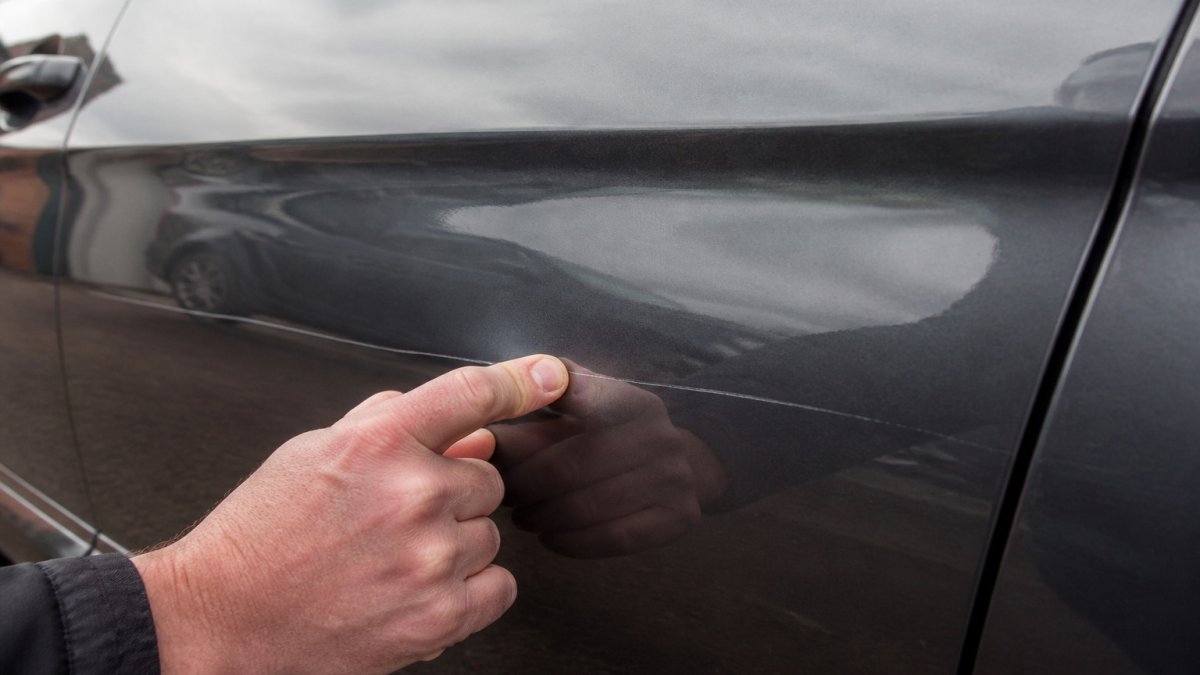
How to check safely. Clean the area first with water and a soft cloth so grit does not add new marks, then dry it.
Once you have placed the damage in a band, the choice narrows: clear-coat marks can be polished at home, colour-coat marks are a judgement call between a touch-up product and a smart repair, and primer or bare-metal damage should go to a professional.
How to Remove Scratches from Car Paint Yourself
Many people try a DIY approach first, and it can work on the lightest marks. The usual method follows a few steps:
- Wash and dry the area thoroughly so no grit scratches the paint further.
- Apply a mild polishing compound with a soft microfibre cloth, working in small circles.
- Check progress regularly. Stop as soon as the mark fades, because each pass removes a little clear coat.
- Clean the area and apply a protective wax or sealant once you are satisfied.
Do not rub harder in the hope of faster results. Excessive pressure can thin the clear coat and create a dull patch that is harder to fix than the original scratch. Work on a cool panel, out of direct sunlight.
We would not attempt a DIY repair on a deep scratch or any mark that shows primer. Sanding through the colour coat without a colour match almost always leaves a visible patch.
Car Scratch Repair Kit Limits and Risks
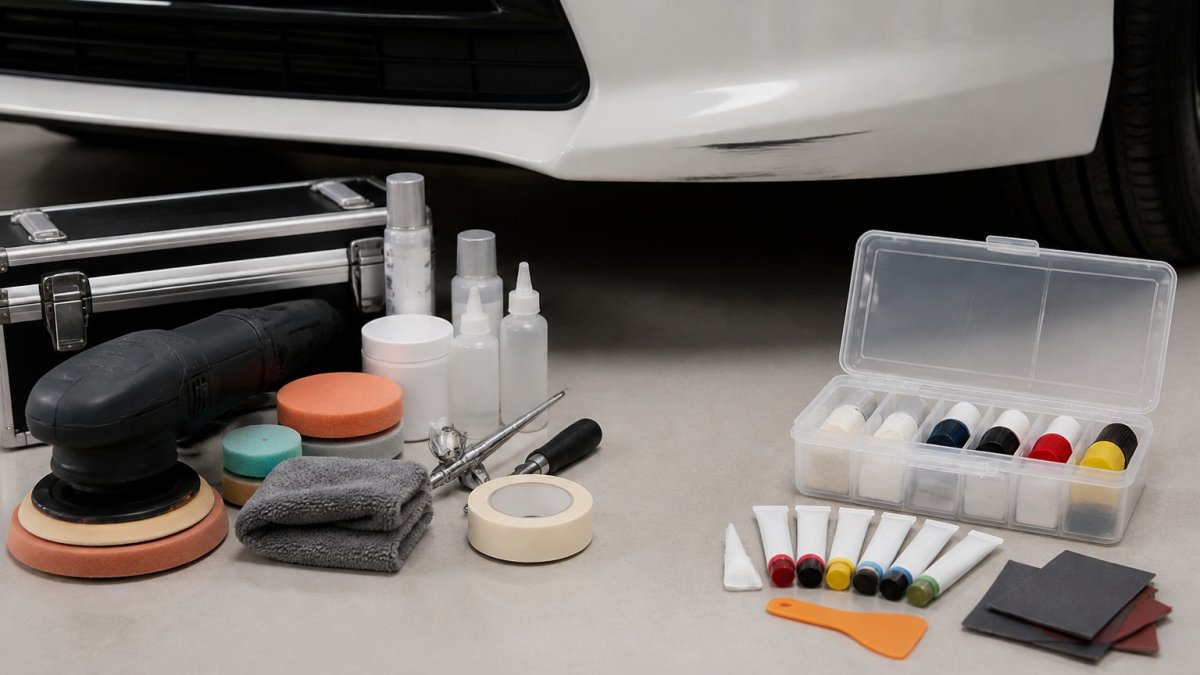
A car scratch repair kit is useful for a narrow range of damage. It usually contains a touch-up pen or paint, a polish and sometimes a fine abrasive.
Colour matching is a common weakness. Factory paint codes, metallic flake and the age of the car all affect the final shade. A slightly wrong colour stands out more than a fine scratch does.
Durability is another concern. A DIY fix that is not properly sealed can crack, fade or lift after a few months of weather and car washes. If you plan to sell the car or return a lease, a visible repair may be judged as damage.
There is also a safety point. Abrasive compounds and solvents need ventilation, and some products are not suitable for use on modern lacquers. Read the label before starting and test on an inconspicuous area first.
Car Scratch Repair Cost: Smart Repair vs DIY
Cost is where many buyers start, but the sums need careful framing because the cheapest upfront option is not always the cheapest overall. Pricing depends on factors such as the extent of damage, the panel affected and the paint type. For a quote specific to your vehicle, see SMART Automotive's pricing page.
| Route | Typical scope | Realistic cost range | What drives the price |
|---|---|---|---|
| DIY polish | Clear-coat marks only | £8 to £25 for a polish and microfibre cloths | Product quality; you supply the time and accept the risk |
| DIY touch-up kit | Light colour-coat chips and fine scratches | £15 to £40 for a pen or kit | Colour-match accuracy; metallic and pearlescent paints cost more |
| Smart repair (single panel) | Scuffs, scratches, small dents on one panel | £80 to £180 per panel | Panel shape, paint type, accessibility, whether blending is needed |
| Smart repair (multi-panel or bumper) | Keyed scratches, bumper corners, several marks | £150 to £350 | Number of panels, extent of blending, removal of trim |
| Traditional body shop (full panel respray) | Deep or multi-panel damage | £250 to £600+ per panel | Labour hours, paint mixing, oven time, courtesy car |
What changes a quote. Several factors move the figure more than the length of the scratch:
- Paint type. Metallic and pearlescent finishes need flake alignment and often a blending coat, which adds time and cost compared with solid colours.
- Panel shape and access. A flat door is quicker than a curved wing, a body line or a bumper corner. Trim removal and masking add labour.
- Location. Mobile repair avoids a bodyshop visit but may carry a call-out element; a fixed site can be cheaper for larger jobs.
- Blending. A repair that must blend into an adjacent panel takes longer than a localised patch.
- Vehicle value and finish expectations. A lease car or a vehicle you plan to sell usually justifies a higher-standard finish.
The hidden costs of DIY. A kit has a low shelf price, but the real cost includes your time, the risk of a failed attempt, and the price of a professional repair if the DIY result needs correcting.
Insurance and excess. For minor damage, a smart repair can be weighed against the excess on a comprehensive policy before deciding whether to claim. Check your excess before deciding: if the repair quote is below it, paying directly usually makes sense. For lease vehicles, check the return standard first before deciding how to proceed.
When you have two or three quotes, the decision usually comes down to depth, panel count and how long you intend to keep the car. A faint clear-coat mark on an older vehicle rarely justifies a professional quote; a deep or multi-panel scratch on a leased or valuable car usually does.
When Professional Car Scratch Repair Is the Better Choice
Professional repair is the better option when the damage is deeper than the clear coat, spans more than one panel, or involves a vehicle whose value or finish matters to you. Keyed and vandal scratches often fall into this category, because they tend to cut through several layers and cross panel edges. Mobile keyed and vandal scratch repair in Hampshire can deal with multi-panel damage in a single visit.
Lease return is another common reason. If you are weighing options, a mobile paint scratch and stone chip repair service can restore colour-matched finishes at your home or workplace. Where the damage is difficult to judge from a photo, an instant damage guide can help you decide what the likely repair involves before you book.
If you want to understand the professional process in more detail, this practical guide to mobile car scratch repair explains what happens, and a step-by-step guide to deep paint scratch repair covers the techniques involved.
Booking Your Repair or Lease Return Check With SMART Automotive
If you are unsure which route suits your damage, the honest answer is to look at depth, location and value first. A faint clear-coat mark on a cheap car may be fine with a polish. A deep or multi-panel scratch on a leased or valuable vehicle usually justifies professional work.
SMART Automotive offers mobile repairs at home or work, with same-day quote responses and repairs typically completed in 1 to 3 hours. Its team is registered to ISO 9001, 14001 and 27001 and offers a lifetime bodywork guarantee. Get a free quote to compare the result against your own assessment.
Frequently Asked Questions
Does a car scratch repair kit work?
A car scratch repair kit can work well on light clear-coat scratches that do not catch a fingernail. Results depend on the scratch depth, the paint colour and how carefully the kit is applied. Scratches that reach the primer or bare metal usually need more than a kit can provide, and a poor application can leave a visible, uneven patch. Test the product on a hidden area first, follow the instructions closely and be realistic about what a DIY finish can achieve.
How much does it cost to repair a car scratch?
The cost of a car scratch repair depends on the scratch depth, the panel affected and whether the repair is carried out at home or by a technician. A DIY kit or polishing compound is usually the lowest outlay, while a professional repair is priced according to the work involved. SMART Automotive provides quote-based pricing, so the most accurate figure for your vehicle comes from its website or a direct quote. Compare any quote with the cost of a bodyshop visit and your insurance excess.
Is a smart repair better than DIY touch-up paint?
A smart repair is usually a better fit for scratches that have gone through the clear coat or affected the colour layer, as professional repair involves preparing the surface and blending the paint into the panel. DIY touch-up paint suits small chips and very light marks where the risk of a visible patch is low. If the scratch is on a prominent panel, or the car is leased or due for sale, a professional finish is generally the safer option.
Can DIY scratch repair affect a car's paintwork or resale value?
A poorly executed DIY repair can leave a dull, mismatched or uneven area that is more noticeable than the original scratch. Over-polishing can also thin the clear coat, which increases the risk of further damage. Buyers and lease-return inspectors may notice a visibly patched finish, so a poor DIY result can reduce a vehicle's appearance and perceived value. Assess the scratch honestly before attempting any home repair.
How can you tell whether a car scratch needs professional repair?
Run a fingernail across the mark. If the nail does not catch, the scratch is likely confined to the clear coat and may suit a DIY polish or kit. If the nail catches, the damage has probably reached the colour coat, primer or bare metal, which usually calls for professional repair. Scratches on areas with heavy wear, rust risk or a lease-return inspection should also be considered for professional attention.
