
Table of Contents
- Assessing Deep Car Paint Scratches: What You're Working With
- Essential Tools and Materials for Your Car Scratch Repair Kit
- Preparing Your Vehicle and Work Area
- Step-by-Step Repair Process for Deep Scratches
- Understanding Deep Car Scratch Repair Cost and When to Get Professional Help
- Professional Mobile Car Scratch Repair: Why It Matters
- Common Mistakes to Avoid When Repairing Deep Scratches
- Frequently Asked Questions
Last Updated: October 16, 2026
Assessing Deep Car Paint Scratches: What You're Working With
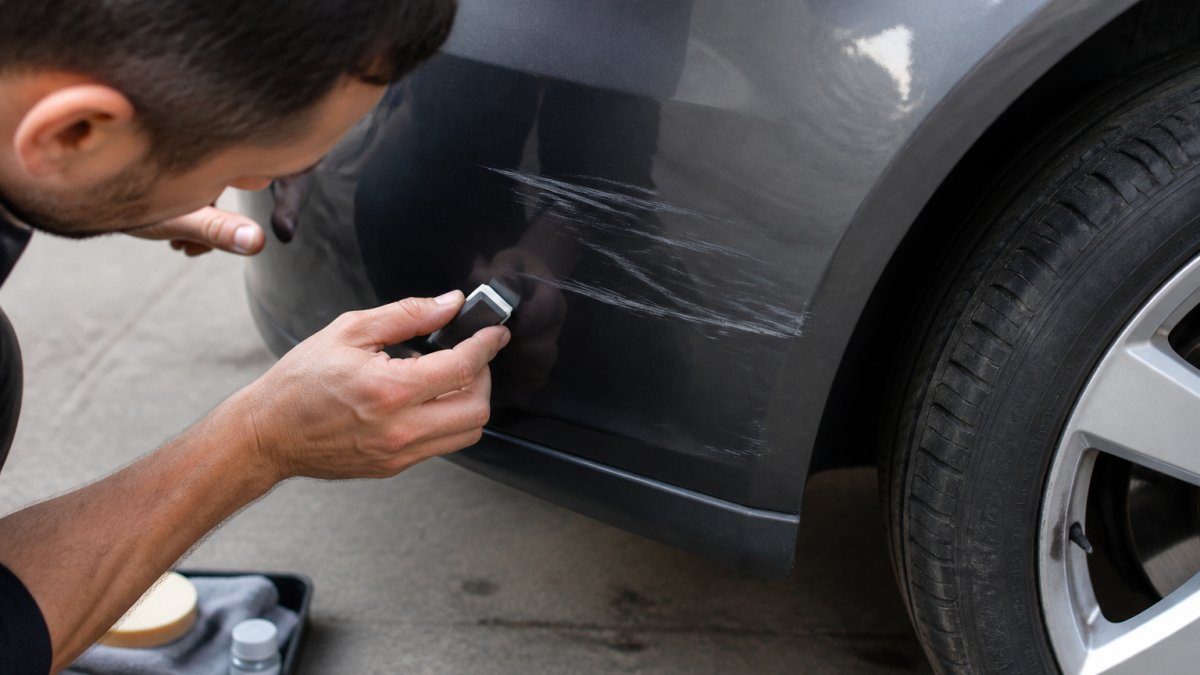
Deep car paint scratches are damage that penetrates through the clear coat and into the base paint layer or primer. They're visible from multiple angles and won't disappear with a simple wash.
Understanding the depth of your scratch determines whether you can repair it yourself or need professional help. A scratch that catches your fingernail is deep. One you can barely see in certain light is shallow.
Understanding scratch depth and severity
You can assess depth by running your fingernail across the scratch. If your nail catches, it's deep. If it's smooth, it's surface-level. Look at the scratch in bright sunlight from different angles. Deep damage shows as a visible line that doesn't disappear from any view.
Metallic and pearl paint finishes hide scratches better than solid colours. A deep scratch on white or black paint stands out immediately. On silver or grey, it may be less noticeable but still requires repair if you're concerned about resale value or lease return conditions.
When to tackle it yourself versus seeking professional help
DIY repair works best for scratches shorter than 10 centimetres on flat panels like doors and boot lids. Scratches near trim, windows, or curved edges are harder to blend and often benefit from professional attention.
Consider professional help if the scratch is longer than 15 centimetres, located on a curved panel, or near plastic trim. Colour matching on metallic paint is extremely difficult without professional equipment.
At SMART Automotive, we handle deep car paint scratches that most DIY attempts struggle with. Our technicians colour-match factory finishes on-site at your home or workplace. For scratches you're uncertain about, a free quote takes the guesswork out of the decision.
Essential Tools and Materials for Your Car Scratch Repair Kit
Repairing deep car paint scratches requires specific supplies. Cheap tools and materials produce poor results that are obvious up close. Invest in quality items and the repair will look professional.
Preparation and safety equipment
You'll need safety glasses to protect your eyes from dust and flying debris. Nitrile gloves keep your hands clean and protect skin from sanding dust and chemicals. A dust mask or respirator prevents inhalation of fine particles.
Work in a well-ventilated space. A garage with the door open or a driveway on a calm day works. Avoid windy conditions that blow dust across your repair.
Gather these preparation items:
- Microfibre cloths (lint-free, essential for cleaning between steps)
- Masking tape (painter's tape, 25 millimetre width)
- Newspaper or drop cloth
- Degreaser or isopropyl alcohol
- Water and bucket for rinsing
Sanding, filling, and finishing supplies
Sandpaper comes in different grits. Start with 400-grit for the damaged area, move to 800-grit for smoothing, then finish with 1200-grit for blending. Buy a sanding block to keep pressure even.
Primer fills exposed metal or primer that shows through the scratch.
For the colour coat, you'll need car touch up paint matched to your vehicle's factory colour. This comes in small bottles with a brush applicator.
Finally, clear coat protects the repair and gives it a factory finish. This is the glossy layer that sits on top of all automotive paint. Apply it after the colour paint dries.
Preparing Your Vehicle and Work Area
Clean the damaged area thoroughly before starting any repair work. Dirt and wax prevent primer and paint from bonding properly.
Wash the panel with soap and water, then dry completely. Use degreaser or isopropyl alcohol on a cloth to remove any remaining wax, polish, or contaminants.
Mask off the area around the scratch using painter's tape. Extend the tape 5 centimetres beyond the damage in all directions. This protects surrounding paint from sanding dust and overspray.
Park your vehicle in a shaded area if possible. Direct sunlight causes paint to dry too quickly, trapping air bubbles and creating an uneven finish.
Step-by-Step Repair Process for Deep Scratches
The repair process requires patience and attention to detail. Rushing any step produces visible defects.
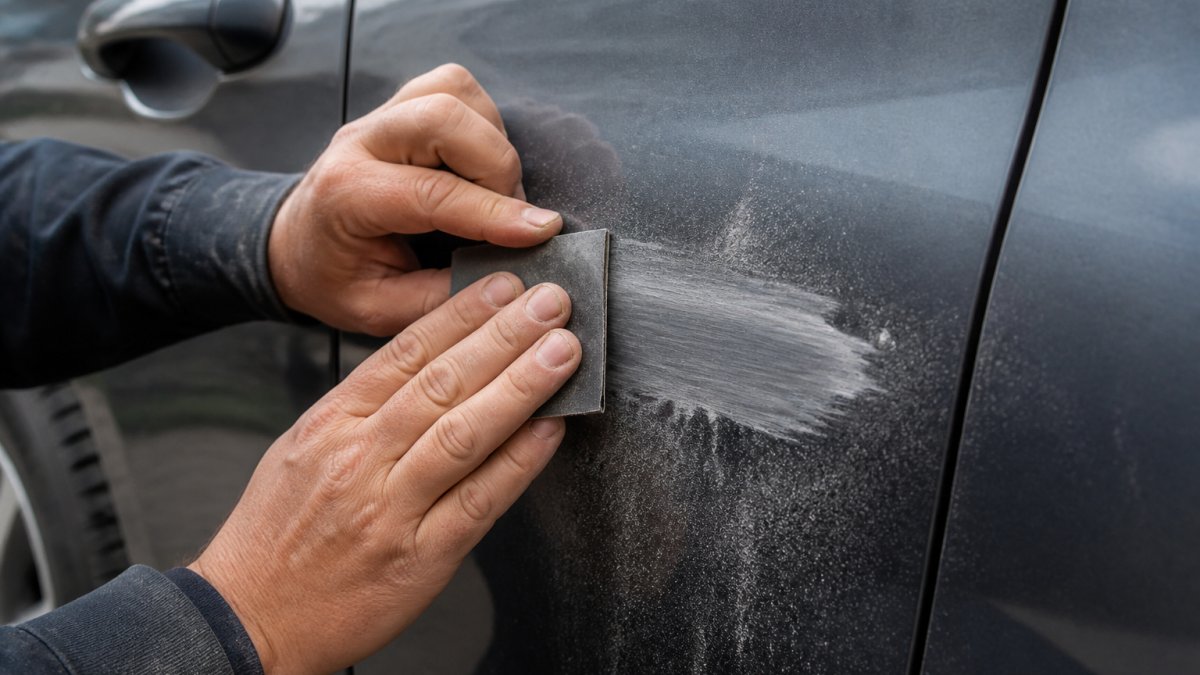
Cleaning and sanding the damaged area
Start by sanding the scratch and surrounding area with 400-grit sandpaper. Sand in straight lines along the direction of the scratch, not in circles. This removes any loose paint and creates a rough surface for primer adhesion.
Sand until the scratch edges are smooth and blend gradually into the surrounding paint. This takes 2-3 minutes for a small scratch. Wipe away dust with a damp microfibre cloth and let it dry.
Switch to 800-grit sandpaper and repeat the process. This removes the scratches left by 400-grit paper. Finally, use 1200-grit sandpaper to feather the edges so the repair blends invisibly into surrounding paint.
Applying primer and filler
Inspect the scratch depth. If bare metal shows, apply a thin coat of automotive primer. Spray it lightly, multiple thin coats are better than one thick coat. Let primer dry according to the product instructions, usually 30 minutes.
If the scratch is shallow and doesn't expose metal, skip primer and apply filler directly. Mix two-part epoxy filler according to package directions. Apply it with a plastic spreader, slightly overfilling the scratch.
Sand the cured filler with 400-grit paper until it's level with surrounding paint. Switch to 800-grit, then 1200-grit, feathering the edges so the repair is invisible.
Using car touch up paint for colour matching
Clean the area again with a damp cloth and let it dry completely. This removes all sanding dust.
Apply car touch up paint using the brush applicator. Paint in thin coats rather than one thick coat. The first coat should barely cover the repair. Let it dry 30 minutes, then apply a second coat. A third coat ensures full colour coverage.
Colour matching is critical. If your paint is metallic or pearl, the angle and lighting affect how the colour appears. Inspect the repair in natural sunlight from different angles. If the colour doesn't match, it's visible from far away.
Sanding and blending the repair
Once the colour coat is completely dry (usually 4-6 hours), sand it smooth with 1200-grit sandpaper. Use very light pressure, you're blending the edges, not removing paint.
Sand in straight lines along the scratch direction, feathering the edges so the repair blends into surrounding paint. The goal is to make the transition invisible to the eye.
Wipe away dust with a damp microfibre cloth and inspect the repair. If you see the edge of the repair clearly, sand more to feather it further.
Applying clear coat and final finishing
Apply clear coat in thin, even coats. Spray from 15 centimetres away, moving in straight lines. Apply 2-3 light coats rather than one heavy coat. Let each coat dry 10-15 minutes before applying the next.
The final coat should cover the repair and extend slightly beyond it, blending into the surrounding clear coat. Once dry, the repair should be invisible, the same gloss level and colour as the surrounding paint.
Let the clear coat cure fully before washing the vehicle. Most products require 24-48 hours. Avoid rain and direct sunlight during curing.
Understanding Deep Car Scratch Repair Cost and When to Get Professional Help
The cost of repairing deep car paint scratches varies by scratch size, location, and paint type. A small scratch on a flat panel costs less than a long scratch on a curved panel or near trim.
DIY repair costs between £20-£80 for materials if you already own basic tools. Professional repair typically costs less than a typical insurance excess, making it cheaper than making a claim for cosmetic damage.
However, professional repair guarantees a factory-standard finish. If your colour match is off or your blending is visible, you've spent time and money on a repair that still looks wrong.
Professional Mobile Car Scratch Repair: Why It Matters
Professional technicians have colour-matching equipment and years of experience blending repairs invisibly. They understand how different paint types behave and how lighting affects colour perception.
Factory-standard finishes and colour matching expertise
Professional shops use advanced techniques to match paint colour precisely. This ensures a perfect match. DIY touch-up paint is approximate, it looks close but rarely matches perfectly.
Metallic and pearl finishes are nearly impossible to match without professional equipment. The angle and depth of metallic particles affect how the colour appears in different lighting. Professional technicians understand these complexities and produce repairs that are invisible even under close inspection.
Speed and convenience of mobile services
Traditional bodyshops require you to drop off your vehicle and wait days for repairs. Mobile services come to your home or workplace, completing the repair while you work or relax.
SMART Automotive technicians repair deep car paint scratches in 1-3 hours depending on scratch size and location. The repair is complete and ready to drive the same day. For busy professionals and fleet managers, this convenience eliminates downtime.
Common Mistakes to Avoid When Repairing Deep Scratches
The biggest mistake is skipping primer on deep scratches that expose bare metal. Without primer, rust develops under the paint within weeks.
Another common error is applying thick coats of paint instead of multiple thin coats. Thick paint runs, sags, and dries unevenly.
Don't sand too aggressively after colour application. You're blending edges, not removing paint. Heavy sanding removes colour and requires repainting.
Ignoring temperature and humidity is another frequent mistake. Paint application in cold weather or high humidity causes adhesion problems and uneven drying.
Finally, many people rush the final sanding and blending step. This is where the repair becomes invisible or obviously visible.
Frequently Asked Questions
How can you tell if a car scratch is deep?
Deep scratches extend through the clear coat and paint layers into the primer or bare metal. Run your fingernail gently across the scratch; if you feel a ridge or the scratch catches your nail, it's deep. Look for exposed primer (usually grey or white) or bare metal (silver). Shallow scratches affect only the clear coat and won't catch your nail. If you're uncertain, professional assessment takes minutes and costs nothing.
Can you repair a deep car paint scratch at home?
Minor deep scratches can be tackled at home with the right car scratch repair kit, including sandpaper, primer, filler, car touch up paint, and clear coat. Success depends on your patience and attention to detail. Colour matching is the biggest challenge with metallic or pearl finishes. Complex scratches, those on curved panels, or repairs requiring factory-standard finishes are best left to professionals who have spray equipment and colour-matching technology.
What's the typical cost difference between DIY and professional repair?
A DIY car scratch repair kit costs between £20-£60, though you'll need quality products for best results. Professional mobile car scratch repair typically costs less than traditional bodyshop estimates, often significantly below your insurance excess. Costs depend on scratch size, location, and paint type. Get a free quote from a professional to compare against DIY investment and your time commitment.
Will a deep scratch on a car rust if left untreated?
Yes. Deep scratches that expose bare metal allow moisture and oxygen to reach the steel underneath, causing rust to form within weeks, especially in damp conditions. Rust spreads beneath the paint, weakening the bodywork and eventually creating structural issues. Even scratches showing primer can rust if the primer layer is damaged. Treating deep scratches promptly prevents rust development and protects your vehicle's value and structural integrity.
Deep car paint scratches don't require a trip to a traditional bodyshop. For scratches longer than 15 centimetres, located on curved panels, or on metallic paint, professional repair ensures a factory-standard finish that's truly invisible. SMART Automotive handles these repairs at your home or workplace, completing them in 1-3 hours with a lifetime bodywork guarantee. Get a free quote today and discover how much cheaper professional mobile repair is compared to traditional bodyshop costs.