
Last Updated: 10 November 2026
Quick Summary
Lease return tyres must be roadworthy and match the condition expected for the car's age and mileage under your contract's fair wear and tear standard, which may be stricter than the legal 1.6mm tread minimum. A tyre can be perfectly legal and still fail the return inspection, so check tread, damage and specification four to six weeks before collection.
- The legal minimum tread depth is 1.6mm across the central three-quarters, all the way round.
- Most inspectors start asking questions when tread reaches 2mm.
- Cuts longer than 25mm, bulges and sidewall cracks are never acceptable.
- Replacement tyres must match the specified size, load index and speed rating.
- Inspect your tyres four to six weeks before collection to avoid provider-rate charges.
Table of Contents
- What Lease Return Tyre Condition Requirements Actually Mean
- Lease Car Tyre Tread Depth: Legal Limits and Wear Indicators
- Lease Car Fair Wear and Tear Guide: What's Acceptable
- Replacement Tyres for a Lease Car: Specification and Matching Rules
- Who Pays for Tyre Replacement and How Charges Are Assessed
- Your Lease Return Inspection Checklist for Tyres and Wheels
- Book a Pre-Return Tyre and Cosmetic Check
- Frequently Asked Questions
What Lease Return Tyre Condition Requirements Actually Mean
Lease return tyres must meet the condition requirements a leasing company applies when the vehicle goes back at the end of the contract.
Most drivers assume the only test is the MOT tread minimum. That is wrong, and it is an expensive mistake.
Your contract sets its own standard, which may be built around a fair wear and tear guide such as the one published by the BVRLA.
Legal Roadworthiness vs Contract Return Standards
Roadworthiness is the legal minimum. Your car must be safe to drive on a public road.
Contract return standards are a separate agreement you signed. They judge the car against fair wear and tear. A tyre can be perfectly legal and still fail the return inspection.
Here is the gap in plain terms:
- Legal: 1.6mm tread, no cuts over 25mm, no bulges, correct pressures
- Contract: tyres must be roadworthy and match the expected condition for the car's age and mileage
- The catch: a legal tyre with a slow puncture, a repaired sidewall, or mismatched brands may still trigger a charge
Driving on a tyre below the legal minimum is an offence, and the consequences are a matter for the police rather than the leasing company.
Lease Car Tyre Tread Depth: Legal Limits and Wear Indicators
The legal minimum tread depth for a lease car tyre is 1.6mm across the central three-quarters of the tread, around the entire circumference.
So how do you check it without a gauge?
Every tyre has wear indicators. These are small raised bars built into the tread grooves.
- 1.6mm bars mark the legal minimum
- 3mm is the point where wet grip drops off noticeably
- 2mm is where most inspectors start asking questions
A 20p coin is a rough field test. Insert it into a groove.
Measure in at least three places on each tyre, and on both edges. Tyres rarely wear evenly.
How Tyre Tread Depth Is Measured at Inspection
Inspectors typically use a tread depth gauge, take readings across the central band and note the lowest figure. They also check for uneven wear patterns, which we cover below.
If the lowest reading sits near the limit, a charge is possible depending on your contract.
These are the tread depth figures that matter when you check your tyres before return.
| Tread depth | What it means |
|---|---|
| 1.6mm | Legal minimum across central three-quarters, all round |
| 3mm | Point where wet grip drops off noticeably |
| 2mm | Where most inspectors start asking questions |
| 20p coin | Rough field test; visible outer rim means near limit |
Tyre tread depth thresholds for lease return
Lease Car Fair Wear and Tear Guide: What's Acceptable
Fair wear and tear means damage consistent with normal use over the contract period. The BVRLA Fair Wear and Tear Standard is the reference point most UK leasing companies work from.
Acceptable wear includes:
- Tyres worn evenly and still above the legal limit
- Minor scuffing on the sidewall with no structural damage
- Wheels with light cosmetic marks that do not affect safety
The key word is consistent. A car returned at 20,000 miles with bald front tyres is not showing fair wear. It is showing neglect.
Kerbed alloys are the most common borderline item. If your wheels are marked, kerbed alloy wheel refurbishment restores the finish before inspection and removes the argument entirely.
Damage That Falls Outside Fair Wear and Tear
Some tyre damage is never acceptable, whatever the mileage:
- Cuts longer than 25mm, or any cut deep enough to reach the cords
- Bulges in the sidewall, which mean internal structural failure
- Cracks in the sidewall rubber from age or sun exposure
A bulging sidewall indicates internal damage and the tyre should not be driven on (The Ultimate “Is This Tyre Safe?” Guide).
Replacement Tyres for a Lease Car: Specification and Matching Rules
Replacement tyres for a lease car must match the manufacturer's specification. That means the same size, load rating and speed rating as the original equipment, and, where fitted from new, the same run-flat construction. The leasing company is not judging whether the tyre is safe; it is judging whether the car has been kept to the contract standard.
How to Read the Tyre Sidewall
Every tyre carries its specification in a single string on the sidewall. A typical marking looks like this:
225/45 R17 94W
- 225, nominal section width in millimetres
- 45, aspect ratio, the sidewall height as a percentage of the width
- R, radial construction
Load indices correspond to a maximum load per tyre, which is listed in standard load index tables (Caravan & Trailer Tyre Load Ratings & Tyre Pressure). Fitting a lower load index than the manufacturer specifies is a common and avoidable return charge, because the tyre is not rated for the car's gross weight even though it fits the rim.
Speed ratings run from the low letters upward, each indicating a maximum approved speed. Fitting a lower speed rating than specified can mean the tyre does not meet the contract standard.
Where to Find the Correct Specification
Do not rely on the tyre that is currently fitted, it may already be wrong. Check the vehicle's tyre placard, usually on the driver's door pillar, inside the fuel filler flap or in the handbook.
If the placard is missing or unreadable, the leasing company's return guide or the manufacturer's handbook is the next authority. Where those conflict, the contract terms take precedence for return purposes.
Matching Rules That Actually Get Checked
- Same size on each axle, at minimum. Mixing sizes across an axle is almost always rejected.
- Load and speed rating at or above the specified figures. Never below.
- Matching brands across an axle is strongly preferred. A mixed pair is not automatically a charge, but it invites scrutiny and is often noted on the condition report.
When a Non-Original Brand Is Acceptable
The contract rarely requires the exact original-equipment brand. What it requires is that the tyre meets the specified size, load index, speed rating and construction, and that it is in roadworthy condition.
A common pattern is that budget tyres meeting the size but not the speed or load rating are the single most frequent cause of specification-related charges.
Watch out: a tyre can be correctly sized and still fail the return check if its load index or speed rating sits below the manufacturer's figure, so check the code as well as the fit.
Who Pays for Tyre Replacement and How Charges Are Assessed
You may be charged for tyre replacement if the tyre fails the return standard. The leasing company may arrange the replacement and recharge you, possibly at its own rates rather than the cheapest available price.
How the Assessment Works
The inspection is carried out against the fair wear and tear standard, most commonly the BVRLA Fair Wear and Tear Standard, which many leasing companies adopt in their contract terms. An assessor works around the vehicle and grades each item, tyre tread, tyre damage, wheel condition, bodywork, against that standard and produces a condition report.
For tyres, the assessor typically records:
- The tread depth reading at each measurement point, taken with a calibrated gauge
- Any cuts, bulges, cracks or sidewall damage, with a description of size and location
- Whether the tyre matches the specified size, load index and speed rating
The report is the basis for any recharge. Ask for it, and check that each item is described specifically rather than as a general comment.
How the Charge Is Calculated
Charges are not usually a fixed penalty. A common pattern is:
- Below the legal limit or unsafe: you pay for a replacement tyre at the provider's rate
- Wrong specification: you pay to correct it, which may mean a pair if the axle is mismatched
- Excess wear for the contract mileage: assessed case by case against the expected wear for the term
Charging approaches vary between providers, so check your contract for how replacements are priced. The contract terms and the provider's return guide are the documents that govern which applies.
Standards Vary by Provider and Contract
There is no single universal return standard. Providers differ in how strictly they apply tread thresholds, whether they require matching brands across an axle, how they treat minor sidewall scuffing, and what they charge for a replacement.
Before you assume a tyre will pass, find the applicable guide and read the tyre section. If the guide is not to hand, ask the provider for it in writing.
Reducing Avoidable Charges
The most effective step for lease return tyres is timing. Inspect your tyres four to six weeks before collection, while there is still time to replace a borderline tyre at retail cost rather than provider rates. Photograph each tyre with a tread depth gauge in frame, and keep receipts for any tyres you fit.
Challenging an Assessment
If you believe a charge is wrong, the evidence that matters is specific and dated:
- Photographs of tread depth with a gauge visible, taken before collection
- Receipts showing the tyre's specification and fitting date
- Service records showing alignment and pressure checks
Raise the dispute through the provider's complaints process first, and keep a written record of each step. The broader playbook on avoiding lease return charges sets out the process in more detail.
Watch out: a verbal assurance at collection that a tyre is 'fine' is not evidence, get the condition report and photograph the tyres yourself before the vehicle leaves your possession.
Your Lease Return Inspection Checklist for Tyres and Wheels
Run this checklist four to six weeks before collection. It gives you time to fix anything borderline.
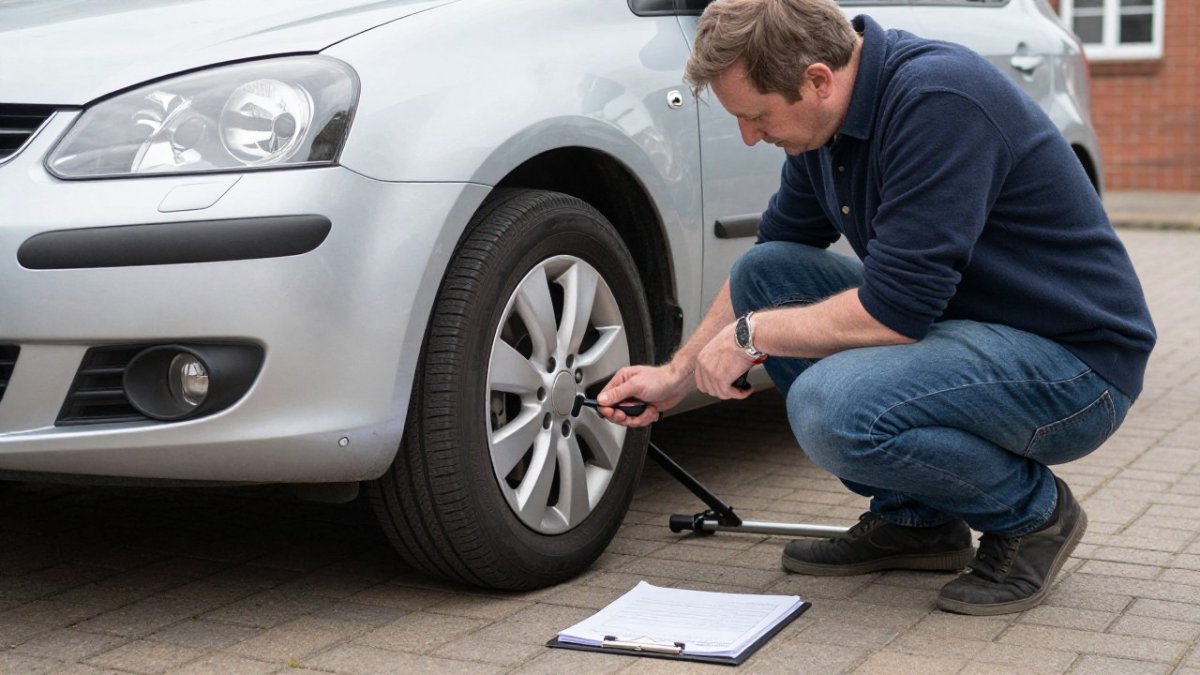
- Measure tread depth on all four tyres, three points each
- Check for cuts, bulges, cracks, and sidewall damage
- Confirm tyre size, load rating, and speed rating match the spec
If you are unsure what a mark needs, upload photos of your damage and get an instant guide to the likely repair and next steps.
Book a Pre-Return Tyre and Cosmetic Check
The final weeks before collection are when small issues become big charges. A pre-return check catches them while there is still time to act.
At SMART Automotive, our mobile team comes to your home or workplace.
We are ISO 9001, 14001 and 27001 registered, and rated 5.0 by Hampshire drivers on Google.
Before your inspection, book a pre-return tyre and cosmetic check and let us handle the tidy-up. Or get a free quote for the work your car needs.
Tyre charges are avoidable, but only if you act before the assessor arrives.
Frequently Asked Questions
What condition do tyres need to be in when returning a leased car?
Tyres must be roadworthy and free from damage beyond fair wear and tear. That means tread depth at or above the legal minimum of 1.6mm across the central three-quarters of the tread, no cuts, bulges, cracks or punctures in the sidewall, and no uneven wear patterns. They should also match the manufacturer specification for size, load rating and speed rating. Check your contract terms, because some lease providers set stricter standards than the legal minimum.
What is the legal minimum tyre tread depth and how does it apply to lease return tyres?
The legal minimum tread depth is 1.6mm across the central three-quarters of the tyre, around its entire circumference. Below that, the tyre is not roadworthy and will fail both an MOT and a lease return inspection. For lease car tyre tread depth, check all four tyres plus the spare if one is fitted. Measure with a tread depth gauge rather than judging by eye, and replace any tyre approaching the limit before collection.
Can a lease company charge for worn or damaged tyres?
Yes. If tyres fall outside the fair wear and tear standard in your contract, the lease provider can recharge replacement or repair costs, often at main dealer rates. Charges typically apply to tread below the minimum, sidewall damage, punctures that cannot be repaired, and mismatched tyres. Documenting tyre condition with dated photos before collection gives you evidence if you need to dispute a charge.
Do replacement tyres for a lease car need to be the same brand?
They do not always need to be the same brand, but they must match the manufacturer specification for size, load rating and speed rating, and ideally be fitted in pairs on the same axle. Many lease contracts require tyres of a comparable quality and specification to the original equipment. Check your contract terms before buying, and keep receipts for any replacement tyres as proof of compliance at inspection.
