Quick Summary
A dent repair technician restores damaged bodywork, usually without repainting. Check that they assess your damage before quoting, explain the method they will use, and provide credentials such as training, insurance and industry memberships. Ask for a written quote and guarantee before any work starts.
- Paintless dent repair suits dents where the paint is intact and the metal is not overstretched.
- Ask whether your dent is suitable for PDR before booking.
- Check experience, professional training, insurance and industry memberships.
- Inspect the finished repair in daylight from several angles before paying.
- Get the quote, timescale and guarantee in writing before work starts.
Table of Contents
- What a Dent Repair Technician Actually Does and When PDR Is the Right Fit
- Questions to Ask a Dent Repair Technician Before You Book
- Checking Experience, Training and Credentials: A Practical Checklist
- Judging the Result: What Paintless Dent Repair Before and After Should Show
- Comparing Quotes and Understanding Dent Repair Cost
- Insurance, Written Terms and Dent Repair Warranty Cover
- Booking Your Dent Repair With SMART Automotive
- Frequently Asked Questions
What a Dent Repair Technician Actually Does and When PDR Is the Right Fit
Last Updated: November 15, 2026
Choosing a dent repair technician in the UK is a bigger decision than most drivers expect. A good technician can restore a door ding so well that nobody finds it, while a poor one can leave you with wavy panels, mismatched paint or a repair that fails within months. This guide covers what a dent repair technician does, when paintless dent repair (PDR) is the right fit, and how to choose someone you can trust.
A dent repair technician restores damaged bodywork, usually without repainting. For a fuller comparison of methods, timescales and when to call a specialist, read how to repair a car dent quickly and cost-effectively. The most common method is paintless dent repair, where the technician works the metal back into shape from behind the panel using specialist tools. The factory paint stays in place, which is why PDR is often quicker and cheaper than a conventional bodyshop repair.
When paintless dent repair works and when it does not
PDR suits dents where the paint is intact and the metal has not been stretched too far. Typical examples include:
- Door dings and small car-park dents
- Hail damage on roofs and bonnets
- Shallow dents on body panels with easy rear access
- Trolley dents and minor kerb impacts
PDR is less suitable when:
- The paint is cracked, chipped or scratched through to the metal
- The dent sits on a sharp body line or edge where the metal is under tension
- The panel has been stretched, creased or torn
- There is no safe access behind the panel
In these cases a technician may still use PDR for part of the work, but the full repair usually needs filling, sanding and repainting. A trustworthy technician will tell you this honestly rather than promising a result they cannot deliver.
Questions to Ask a Dent Repair Technician Before You Book
Before you book, ask a few direct questions. The answers tell you a lot about how the technician works.
- Is my dent suitable for PDR? A good technician will assess the paint and metal before quoting.
- What tools do you use? Quality PDR tools make a visible difference to the finish.
- Will the factory paint be kept? If the answer involves repainting, ask why.
- Do you come to me? Mobile service saves time if you cannot easily drop the car off.
- What is the turnaround time? Most straightforward repairs take a few hours, not days.
- What happens if the result is not right? Ask about the guarantee before you pay.
Watch out: a technician who quotes a fixed price without seeing the damage is guessing. Ask for an assessment first.
Checking Experience, Training and Credentials: A Practical Checklist
Experience and training matter more than marketing. Work through this checklist before you commit:
- How many years has the technician worked on dent repair?
- Are the technicians professionally trained, and by whom?
- Do they hold recognised industry memberships or qualifications, such as Institute of the Motor Industry (IMI) membership?
- Are they insured for the work they carry out?
- Can they show examples of previous work?
- Do they have a registered, documented process for waste and environmental responsibility?
SMART Automotive's team of 18 technicians averages 23 years of experience, and the business holds ISO 9001, 14001 and 27001 registration. You can review the team's qualifications and track record on the decade of specialist SMART repair page. Ask any provider to show you the credentials behind their claims.
Verifying references, reviews and previous work
Reviews are useful, but read them with care. Look for detailed reviews that describe a specific repair, not generic praise. Check reviews on independent platforms, and ask for references if you want more reassurance. Before-and-after photos of similar damage are the strongest evidence of quality, so ask to see them.
Customers who have used SMART Automotive have described repairs like this: "Repaired a nasty kerbed alloy on my driveway in under 2 hours. Looks brand new, saved me a fortune vs the main dealer." Use reviews like this as a starting point, then verify them yourself.
The article sets out the key questions and credentials to check before booking a technician.
| Credential | What to look for | Why it matters |
|---|---|---|
| Experience | Years working on dent repair | Shows the technician has handled a range of damage |
| Training | Professional training and its source | Confirms the repair method is taught properly |
| Memberships | Recognised industry body, such as IMI | Indicates a recognised professional standard |
| Insurance | Cover for the work carried out | Protects you if something goes wrong |
| Portfolio | Examples of previous work | Lets you judge the quality of finished repairs |
| Waste process | Documented environmental process | Shows responsible handling of materials |
Judging the Result: What Paintless Dent Repair Before and After Should Show
A good PDR repair should leave the panel smooth to the touch and matched to the surrounding paint. But judging the result consistently takes more than a quick glance. Use the method below to assess both examples of previous work and your own finished repair.
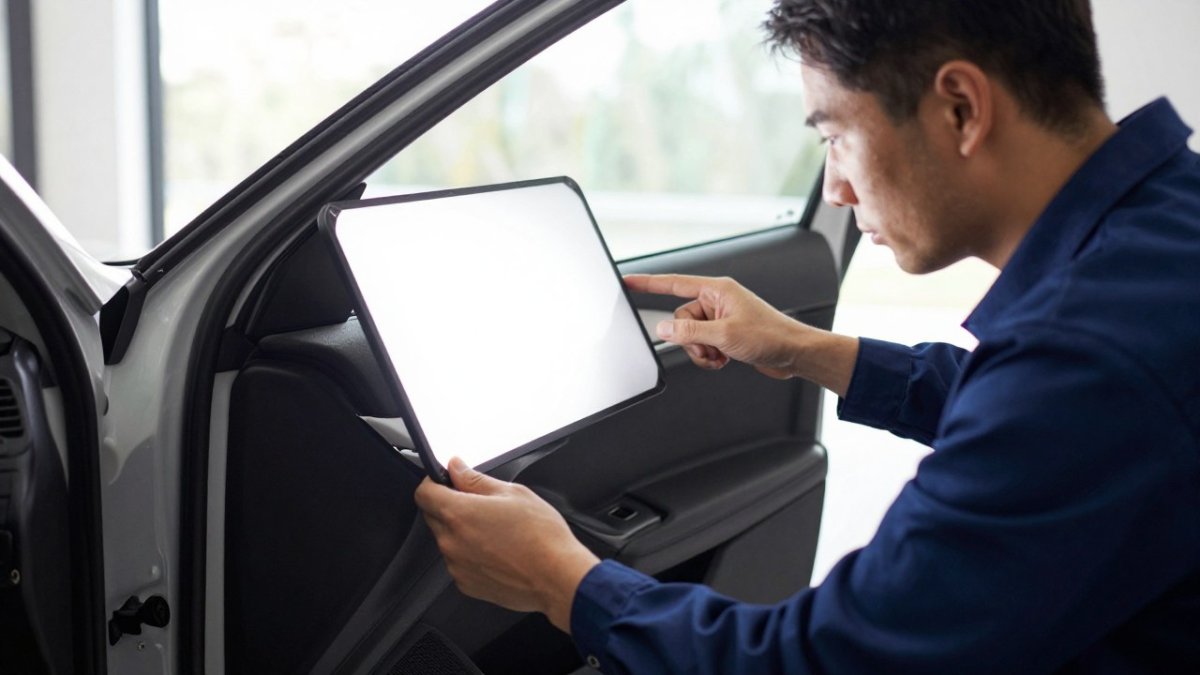
A consistent method for judging before-and-after work
When you look at a technician's portfolio, compare before-and-after images taken under the same lighting and from the same angle. A credible example shows the dent clearly in the 'before' shot and the same area in the 'after' shot, with reflections running smoothly across the panel. Ask whether the example is a comparable repair: same panel, similar dent size and similar paint condition. If the examples are all small door dings but your dent is on a crease, they may not represent your repair.
When you inspect your own finished work, take the car outside in daylight and view it from several angles. Flaws that are invisible indoors often show up in natural light. Run your hand lightly over the repair area to feel for ripples, and use a reflection line, such as a window frame or a nearby building, to check that the panel reflects light evenly.
Check the following:
- The surface reflects light evenly, with no ripples or waves
- The paint shows no new cracks, chips or dull patches
- The dent area lines up with the body line
- The colour matches the rest of the panel in daylight
- Panel gaps and trim sit flush, with no new gaps or loose fittings
Aftercare and resolving unsatisfactory repairs
At handover, inspect the repair before you pay and before the technician leaves. If something looks wrong, raise it immediately and ask for it to be documented. Take photographs of the area from several angles and keep any written guarantee or invoice. If a concern emerges later, contact the technician in writing, describe the issue and include your photographs. A credible provider will explain the next steps and whether the guarantee covers the work. If the response is unsatisfactory, ask for the complaint procedure in writing and keep a record of all correspondence. Knowing what to inspect and how to document concerns protects you if the result or guarantee falls short.
!A technician in work clothes inspects a car door panel in daylight, with a light board reflecting a smooth finish on the metal.
Comparing Quotes and Understanding Dent Repair Cost
Dent repair cost depends on the size of the dent, its location, whether the paint is intact and how accessible the panel is. Two quotes for the same damage can differ for good reasons, so compare them on the same basis.
When you compare quotes, check:
- Whether the price covers the full repair or only part of it
- Whether the quote includes mobile attendance
- Whether a repaint is included or would be extra
- How quickly the provider responds to your enquiry
SMART Automotive offers a free quote and same-day response, and most repairs cost less than a typical insurance excess. For current prices, see the SMART Automotive pricing page or request a quote for your specific damage.
Insurance, Written Terms and Dent Repair Warranty Cover
Get the terms in writing before work starts. A written quote should state what is included, the timescale and the guarantee. Check whether the repair is covered by the lifetime bodywork guarantee, and what that guarantee excludes. You can see the full terms and how to make a claim on the lifetime bodywork guarantee page.
If you are returning a leased car, ask whether the lease company will accept the repair. Written confirmation of the finish protects you from unexpected lease return charges.
If your insurer is involved, check the policy before you book. Some insurers have preferred repairers or specific rules, so confirm what your policy allows.
Booking Your Dent Repair With SMART Automotive
SMART Automotive provides mobile cosmetic repair across Hampshire. We come to your home or workplace, repair most damage in one to three hours, and dispose of waste responsibly. Our lifetime bodywork guarantee covers the repair for as long as you own the vehicle.
If you are ready to go ahead, get a free quote and describe your damage. Same-day quote response means you will not be left waiting.
Get the dent fixed without the bodyshop hassle. Get a free quote with SMART Automotive and see your car look factory-finished again.
Frequently Asked Questions
How do I choose a reliable dent repair technician?
Start by checking that the technician has relevant training and can show evidence of their work, such as before-and-after photos and genuine customer reviews. Look for recognised qualifications, for example from the Institute of the Motor Industry, and ask how long they have been repairing vehicles. Confirm they will give a written quote and explain what it covers. A reputable business will answer these questions directly and without pressure, and will be happy for you to take time before booking.
Is paintless dent repair suitable for every dent?
No. Paintless dent repair works best on dents where the paint is intact and the metal can be reshaped from behind or through an access point. Creases, sharp edges, deep dents in thin panels, and damage where the paint has cracked or chipped often need conventional bodywork and refinishing. A good technician will inspect the damage and tell you honestly if PDR is not the right method, rather than promising a result they cannot deliver.
How much does mobile dent repair cost?
Pricing depends on the size, depth and location of the dent, the panel involved, and whether any paint work is needed. For current prices, visit the SMART Automotive pricing page or request a quote, which is answered on the same day. When comparing quotes, check that each one covers the same work, includes any call-out or travel charges, and states whether the repair is guaranteed. The cheapest quote is not always the best value if the finish is poor.
What are the warning signs of a poor dent repair service?
Be cautious of vague quotes with no written breakdown, reluctance to show previous work, no verifiable reviews or references, and pressure to pay in full before the work is inspected. Other warning signs include no guarantee on the repair, unclear insurance or payment terms, and a technician who promises an exact match without examining the paint. Any repair that leaves visible ripples, mismatched colour or lifted paint should be discussed before you pay.
