
Last Updated: October 25, 2026
Quick Summary
Car dent repair is the process of restoring a vehicle's bodywork to its original condition after impact damage, including bumper scuffs, door dings, and creases. Modern car dent repair services offer faster, cheaper alternatives to traditional bodyshop visits, especially for cosmetic damage that doesn't affect safety or function.
- Paintless dent removal (PDR) preserves factory paint and typically takes 1-2 hours for small dents where paint is unbroken
- Professional car dent repair often costs less than your insurance excess, making it cheaper to pay out of pocket for minor damage
- Mobile car dent repair services complete most repairs in 1-3 hours at your location, eliminating travel and waiting time
- DIY methods work on only about 10% of dents and risk making damage worse; professional repair is safer and more cost-effective
Table of Contents
- Understanding Car Dent Repair Services
- Paintless Dent Removal: When and How It Works
- Car Dent Repair Cost: What You'll Actually Pay
- How Long Does Dent Repair Take
- Mobile Dent Repair: Convenience Without the Garage
- DIY Dent Repair Methods for Minor Damage
- Getting a Professional Car Dent Repair Quote
- Frequently Asked Questions
Understanding Car Dent Repair Services
A car dent repair is the process of restoring a vehicle's bodywork to its original condition after impact damage. This includes bumper scuffs, door dings, creases, and kerbed alloys. The goal is to return your car to factory-standard appearance without the cost and inconvenience of traditional bodyshop visits.
Most car owners assume a dent means a trip to the garage, a week without their vehicle, and a bill that rivals their insurance excess. That's not always true. Modern car dent repair services offer faster, cheaper alternatives, especially for cosmetic damage that doesn't affect your car's safety or function.
What we've learned is simple: the repair method matters far more than the damage itself. A minor dent handled poorly can look worse than it started. The right approach, applied quickly, leaves no trace.
The core question isn't whether your dent can be fixed. It's which method makes sense for your specific damage, your budget, and your timeline. That's what we'll break down here.
Paintless Dent Removal: When and How It Works
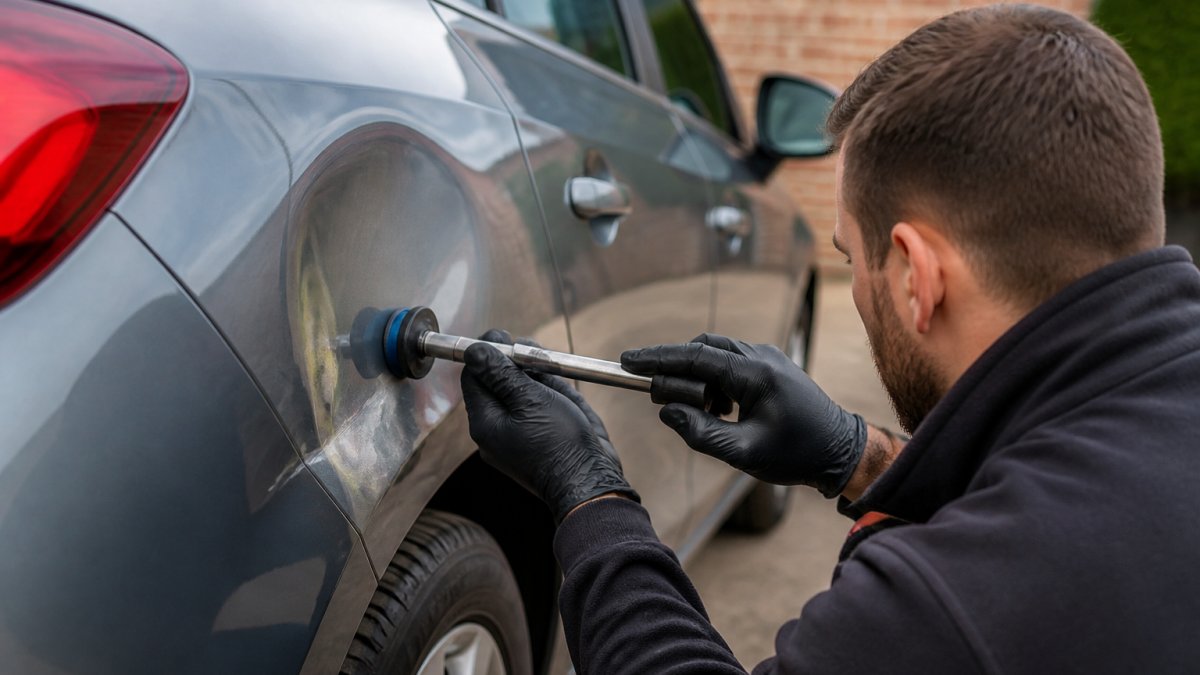
Paintless dent removal (PDR) is a technique that restores dents without repainting the panel. A technician uses specialist tools to massage the dent out from behind the panel, preserving your factory paint finish entirely.
This method works best for:
- Door dings and minor creases
- Hail damage across multiple panels
- Bumper dents without paint damage
- Alloy wheel scuffs and kerbing
PDR won't work if the paint is cracked, scratched, or missing. Once the clear coat is broken, you need repainting anyway, and that's a different job.
The advantage is obvious: no paintwork means no colour-matching risk, no drying time, and no chemical fumes. The Institute of the Motor Industry recognises PDR as a legitimate repair discipline when performed by qualified technicians. Your factory finish stays intact, which matters if you're leasing or planning to sell. Learn how mobile car repairs match factory paint finishes and achieve factory-standard results.
The process typically takes 1-2 hours on site for small dents where the paint is unbroken, depending on dent size and location. Technicians work from the back of the panel, carefully applying pressure to gradually push the dent out. It requires precision and experience, rush the job and you risk making it worse.
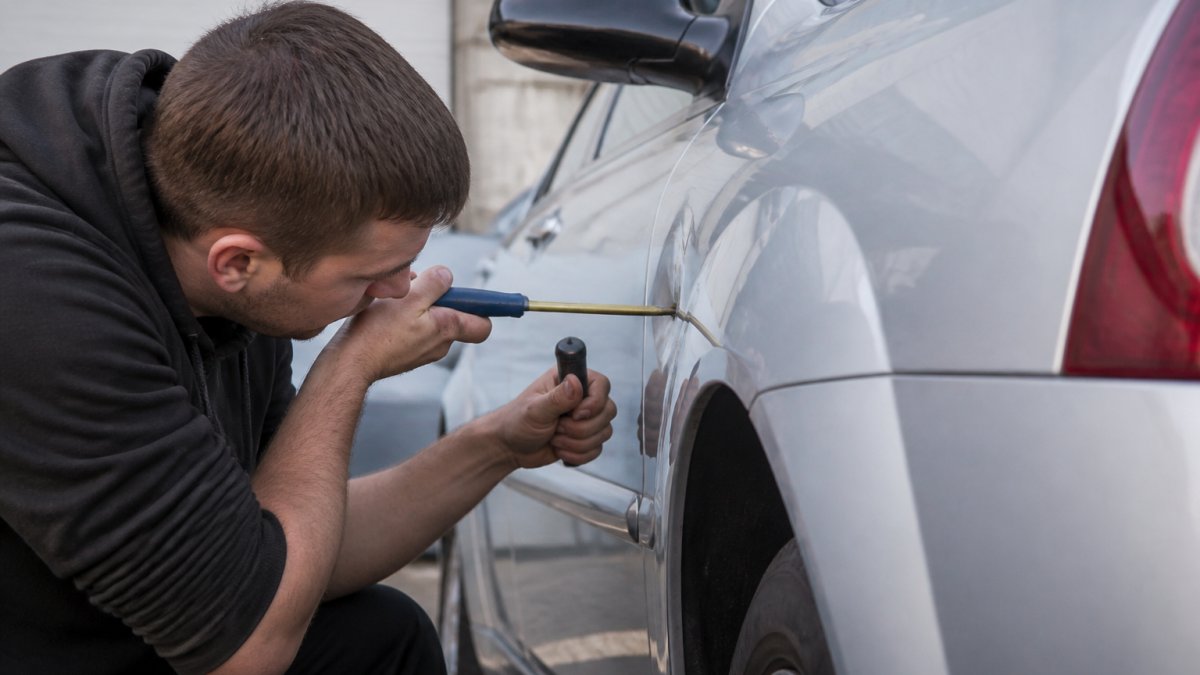
What most guides miss: not every dent is suitable for PDR, even if it looks minor. Access matters. If the dent is on a panel with complex internal bracing, or if the damage is creased rather than rounded, PDR may not work. A qualified technician will assess this in seconds, but only if you ask the right questions upfront.
Car Dent Repair Cost: What You'll Actually Pay
Pricing for car dent repair depends on several factors: dent size, location, paint damage, and the repair method chosen. Rather than quote specific figures that vary by damage, we recommend getting a photo-based quote.
Here's what shapes the cost:
- Dent size: Larger dents take longer to repair
- Location: Dents on curved panels are harder to access
- Paint condition: Scratches or cracks add repainting costs
- Panel type: Plastic bumpers cost less than metal doors
- Alloy wheels: Specialist finishes (diamond cut, two-tone) add complexity
Many vehicle owners are surprised to learn that professional car dent repair often costs less than their insurance excess. This is especially true for minor damage. If your excess is £500 and a dent costs £150 to repair, paying out of pocket saves you the insurance claim and protects your no-claims discount.
For end-of-lease vehicles, a quick repair can save hundreds in penalty charges. Lease companies inspect for damage when you return the car. Small dents and scuffs trigger deductions. A targeted repair before handover costs far less than the penalty.
The best approach: take a photo of the damage and send it to a professional. Many services, including SMART Automotive, offer same-day quote responses with no obligation.
How Long Does Dent Repair Take
How long does dent repair take? Most professional repairs complete in 1-3 hours, depending on damage complexity and repair method.
Here's the breakdown:
- Minor dents (PDR): 30 minutes to 1 hour
- Moderate dents (PDR + touch-up): 1-2 hours
- Multiple dents or scuffs: 2-3 hours
- Alloy wheel repairs: 1-2 hours per wheel
Mobile car dent repair services work at your location, your driveway, office car park, or workplace. You don't wait in a garage reception. The technician arrives, completes the work, and leaves. You drive away with your car repaired.
Traditional bodyshops take days or weeks. Your car sits in a queue. Paintwork requires drying time. Reassembly takes additional hours. A simple dent that takes 2 hours with a mobile service can take 5-7 days at a bodyshop.
For busy professionals, this matters. If you work in Southampton and can't spare a day away from the office, a mobile technician coming to your workplace solves the problem. See how our mobile SMART repair process works from photo quote to finished repair.
The real time-saver isn't just the repair duration, it's the total time away from your vehicle. Mobile services eliminate travel, waiting, and logistics. You get your car back the same day.
Professional dent repairs typically complete within a few hours, depending on the damage type and repair method used.
| Damage Type | Time Required |
|---|---|
| Minor dents (PDR) | 30 minutes to 1 hour |
| Moderate dents (PDR + touch-up) | 1-2 hours |
| Multiple dents or scuffs | 2-3 hours |
| Alloy wheel repairs | 1-2 hours per wheel |
Mobile Dent Repair: Convenience Without the Garage
Mobile car dent repair brings the repair to you instead of you going to the garage. A technician arrives at your home, office, or workplace with specialist equipment and completes the repair on-site.
Why this matters:
- No appointment delays: Bodyshops have queues. Mobile services fit around your schedule
- No travel time: Your car doesn't leave your driveway
- No hire car hassle: You keep your vehicle
- No lost productivity: Work continues while repairs happen
- No parking headaches: The technician works where your car already is
Fleet managers benefit most. A delivery company with 20 vehicles can't afford to take multiple cars off the road for a week each. Mobile repair means minimal downtime. A scratched bumper gets fixed in 2 hours while the driver waits, or continues working if it's a non-urgent cosmetic job.
Lease return customers use mobile services to tidy up minor damage before handover. A technician visits your home, fixes three or four small dents and scuffs in one visit, and you avoid lease penalty charges.
SMART Automotive operates across Hampshire with a team of 18 technicians. Same-day quotes are standard.
The one limitation: weather. Heavy rain or extreme cold can affect paint-based repairs. Most services, including ours, work in light rain but not downpours. Check our straight answers on whether we work in bad weather and other common questions.
DIY Dent Repair Methods for Minor Damage
For very minor dents, small dings that haven't cracked the paint, a few DIY methods exist. These work best on shallow, rounded dents in plastic bumpers.
The plunger method:
Use a cup plunger (the flat-bottomed kind for sinks, not the flange type for toilets). Wet the dent and surrounding area. Press the plunger firmly and pull sharply. The suction can pop out shallow dents. This works occasionally on plastic bumpers but rarely on metal panels.
The boiling water method:
Heat water to near-boiling. Pour it over the dent on a plastic bumper. The heat softens the plastic. Push the dent out from behind if you can access the panel. Let it cool. This is temporary at best and risks damaging paint or trim.
The dry ice method:
Dry ice cools the metal rapidly, causing contraction. In theory, this can pop out small dents. In practice, it's slow, dangerous (dry ice burns skin), and often ineffective. Not recommended.
The suction cup method:
Specialist dent-puller suction cups exist. They work on shallow dents in metal where you can create a seal. Results are mixed. Cheap versions rarely work. Professional versions are expensive for a one-time use.
The honest truth: DIY methods work on maybe 10% of dents, very shallow, small, rounded damage on plastic bumpers with no paint damage. For anything else, they waste time and risk making the damage worse.
A professional repair costs less than your insurance excess and leaves no risk. If the dent is visible enough to bother you, it's worth fixing properly.
Watch out: don't attempt DIY repair on alloy wheels or painted surfaces. You risk scratching the paint further or permanently damaging the wheel. Specialist wheel repair requires equipment and expertise most people don't have.
Getting a Professional Car Dent Repair Quote
A professional car dent repair quote should be fast, free, and accurate. Here's what to expect.
Most services now use photo-based quoting. You upload a clear photo of the damage from multiple angles. A technician reviews it and sends back a quote within hours, often the same day.
In-person quotes take longer but catch details photos might miss. Small scratches, paint condition, and panel access are easier to assess face-to-face.
A good quote includes:
- Repair method (PDR, paint touch-up, or full respray)
- Estimated time on-site
- Total cost with no hidden fees
- Warranty or guarantee on the work
- Booking options (same-day, next-day, or scheduled)
SMART Automotive offers same-day quote responses.
Avoid quotes that seem too cheap. A £50 quote for a bumper repair that others charge £200 for suggests either the damage is minor (good news) or the quote is incomplete (bad news). Ask what's included.
Avoid quotes with vague language like "starting from" or "approximately." A professional quote is specific: "This dent will take 90 minutes using PDR, cost £X, and includes a lifetime guarantee on the repair."
A dented car doesn't mean a week in the garage or a bill that breaks the bank. Modern repair methods, especially mobile services, fix cosmetic damage quickly, affordably, and without disrupting your life. Whether you're protecting your lease return, maintaining your vehicle's appearance, or simply wanting a quick fix, professional car dent repair is faster and cheaper than most people expect. SMART Automotive handles dent repairs across Hampshire with factory-standard results, often completing work within 24 hours of your quote. Get a free quote and see how much you can save.
Frequently Asked Questions
How much does car dent repair cost?
Car dent repair cost depends on the dent's size, location, and whether repainting is needed. Minor dents often cost less than a typical insurance excess, making professional repair more economical than claiming on insurance. For an accurate quote, contact a specialist service and describe the damage. Most providers respond with estimates within hours.
Can a car dent be repaired without repainting?
Yes. Paintless dent removal restores small to medium dents without touching the original paint, preserving your vehicle's factory finish. This method works best on dents without creases or paint damage. If the dent has affected the paint or created a crease, repainting may be necessary. A technician can assess whether your dent qualifies for paintless repair during an inspection.
How long does dent repair take?
Most professional dent repairs take 1-3 hours, depending on damage severity. Simple dents may be fixed in under an hour, whilst larger or multiple dents take longer. Mobile repair services often complete work at your home or workplace without requiring you to visit a garage, minimising disruption to your day.
Is mobile dent repair suitable for all types of damage?
Mobile dent repair works well for bumper scuffs, minor dents, scratches, and alloy wheel damage. Specialists can often match factory finishes on-site and provide same-day assessments. However, severe structural damage or large areas requiring panel replacement may need traditional bodyshop facilities. A mobile technician can advise whether your damage is suitable during an initial consultation.
