
Last Updated: November 7, 2026
Quick Summary
Most mobile bumper repair takes between one and three hours of hands-on work, with the vehicle ready to drive shortly after the technician finishes. The exact time depends on damage severity, paint type and weather, so set aside a morning or afternoon rather than a full day.
- A typical bumper scuff repair takes around two to three hours from arrival to handover.
- Preparation, sanding and filling usually take 30 to 60 minutes.
- Priming, painting and colour matching typically take 45 to 90 minutes.
- Paint is usually touch dry within 30 to 60 minutes of the final coat.
- Skip the car wash for at least a week after a repair.
Table of Contents
- Mobile Bumper Repair Times: What to Expect on the Day
- How Long Does Bumper Scuff Repair Take?
- Bumper Repair Process: The Steps That Fill the Time
- Time Estimates by Damage Type and Severity
- Bumper Paint Drying Time and Curing Explained
- When Can I Drive After Bumper Repair?
- Weather, Site Conditions and What to Prepare
- When Mobile Bumper Repair Is Not Suitable
- Frequently Asked Questions
Mobile Bumper Repair Times: What to Expect on the Day
Most mobile bumper repairs take between one and three hours of hands-on work, with the vehicle ready to drive shortly after the technician finishes. We recommend setting aside a morning or afternoon rather than a full day. The exact mobile bumper repair time depends on damage severity, paint type and weather.
A scuff on a plastic bumper is a cosmetic problem, not a mechanical one. That matters because it changes what the repair involves. No panels come off. No workshop bay is needed. A mobile repair technician brings the tools to your driveway or office car park and works on the car where it stands.
Below, we break down the full timeline: hands-on work, drying time, curing time and when you can drive. We will also cover what you can do to keep the appointment on schedule.
How Long Does Bumper Scuff Repair Take?
A typical bumper scuff repair takes around two to three hours from arrival to handover. Small scuffs on a flat area of the bumper sit at the lower end. Deep scrapes, cracked plastic or damage near sensors push it toward three hours or more.
The work splits into two phases. First comes preparation and painting, which is the bulk of the time. Then comes drying, which runs while the technician packs up. For a fuller breakdown of bumper scuff repair in Hampshire, including how cost and time compare with replacement, our service page covers the detail.
What most guides miss is that the clock starts before sanding. Setting up, masking adjacent panels and matching the colour all take time. A technician who skips those steps will finish faster and leave you with a finish that shows.
Bumper Repair Process: The Steps That Fill the Time
Every mobile bumper repair follows the same core sequence. The steps do not change; only the time spent on each one does. Here is the order a technician works through, and why each step takes as long as it does.
Preparation, Sanding and Filling
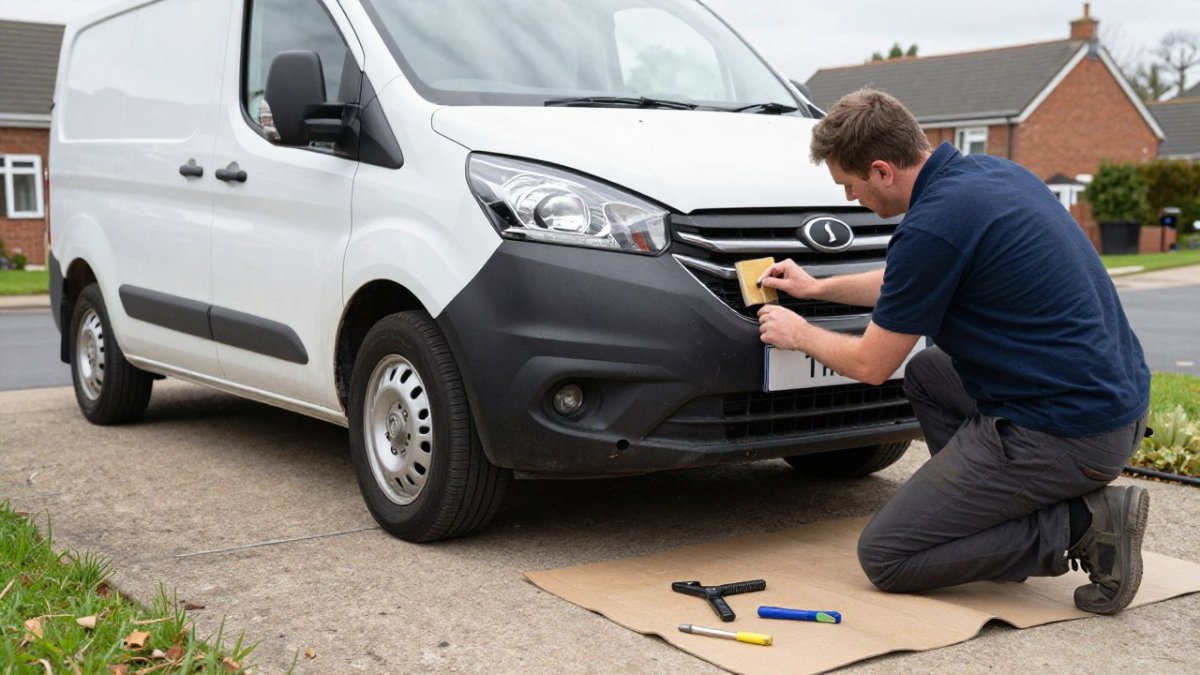
Preparation is where a repair is won or lost. The technician cleans the area, masks surrounding panels and trims, then sands back the damaged paint to a stable edge. Filler goes on in thin layers and is sanded smooth between coats.
This stage typically takes 30 to 60 minutes. Deeper scuffs need more filling and more sanding, so they sit at the top of that range. Rushing prep is the most common cause of a finish that looks patchy six months later.
Priming, Painting and Colour Matching
Primer goes on first, then the colour coat, then clear coat. Colour matching is the step that decides whether the repair disappears or stands out.
If you want to understand how a mobile finish can match factory paint, our guide on matching factory paint finishes explains the techniques and tools involved. This stage usually takes 45 to 90 minutes, depending on how many coats the colour needs.
Time Estimates by Damage Type and Severity
Damage severity is the single biggest factor in repair duration. A light scuff and a cracked bumper are different jobs, even though both sit on the same panel. Use the table below as a rough guide when you book, then read the caveats underneath, they explain why a quote can move once the technician starts work.
| Damage type | Typical hands-on time | What drives the time |
|---|---|---|
| Light scuff or scratch | 1-1.5 hours | Minimal prep, one colour coat |
| Deep scrape into plastic | 1.5-2.5 hours | Filling, sanding, primer coats |
| Multiple scuffs on one bumper | 2-3 hours | Larger blended area |
| Crack or split in plastic | 2-3+ hours | Structural repair before paint |
| Damage near sensors or trim | 2-3+ hours | Careful masking and refitting |
| Bumper requiring replacement | Half a day or more, often workshop-based | Removing and refitting the bumper, transferring sensors and trim, paint blending across adjacent panels |
A light scuff is usually a single-stage repair: sand the damaged area, apply a thin filler if needed, prime, colour coat and clear coat.
A deep scrape that has gone through the paint and into the plastic takes longer because the filler has to build up in thin layers, each sanded back before the next. That is why the estimate jumps from around an hour to two and a half hours even though the visible damage looks similar in size.
Cracks and splits are a different category. That structural work adds time and is the point where a mobile repair can become unsuitable if the crack runs into a mounting point or reinforcement area.
Hidden damage can sometimes extend a repair beyond the initial assessment, so it is worth having the bumper inspected before work begins.
Severity also affects price, not just time. If you are weighing up the job, our breakdown of bumper scuff repair costs pairs the time estimates above with the factors that move the price.
Typical hands-on repair time by damage type
Bumper Paint Drying Time and Curing Explained
Bumper paint drying time is not the same as curing time, and mixing the two up causes most of the confusion around mobile repair. Drying is when the paint stops being wet. Curing is when it reaches full hardness.
- Touch dry: usually within 30 to 60 minutes of the final coat
- Handling dry: typically a few hours, which is why most cars are drivable the same day
- Full cure: generally several days, during which the paint keeps hardening
Fast-drying materials let a mobile technician finish and hand back the car in one visit. The paint is safe to drive with long before it is fully cured. Treat the first few days gently and the finish will last.
When Can I Drive After Bumper Repair?
You can usually drive within a few hours of the repair, once the paint is handling dry. Most customers drive away the same day. The technician will confirm when the surface is ready before handing back the keys.
A few sensible rules for the first few days:
- Avoid pressure washing the repaired area
- Skip the car wash for at least a week
- Do not polish or wax the new paint while it cures
- Park away from direct sunlight where you can
If you need the car back for a commute or a school run, tell the technician when you book. A morning appointment usually means the car is ready by early afternoon.
Weather, Site Conditions and What to Prepare
Weather affects mobile repair more than most people expect. Paint needs a stable temperature and a dry surface. Rain, high winds and direct sunlight all slow the job or stop it outright. A garage, carport or covered car park gives the technician the best conditions.
Temperature is the variable that catches people out. Paint systems generally perform best within a moderate temperature range. Temperature extremes can slow or complicate the process, which may lengthen the appointment.
Humidity matters too. High humidity slows the drying of water-based primers and can cause blushing in the clear coat. Wind is a mixed blessing: a light breeze helps solvent flash off, but strong wind carries dust and grit onto wet paint and makes masking difficult. Direct sunlight heats the panel unevenly, so a technician will often move the car into shade or work on the shaded side first.
Rain is the obvious stopper. Rain or a wet panel can prevent paint work from proceeding, so a covered space may help the appointment go ahead.
What you should prepare before the technician arrives:
- Clear space around the bumper, roughly a car's width, so the technician can work without moving the car
- Move bins, bikes or garden furniture out of the way
- Have the keys ready and the car unlocked
- Mention any sensors, parking aids or wraps on the bumper
- If you have a garage or carport, clear it and mention it when booking, it may allow the appointment to go ahead in marginal weather
- Wash the car the day before if you can, so the technician is not cleaning road film before starting
A common pattern is that appointments booked for an open driveway in winter take longer than the same job in summer, not because the work is harder but because the technician has to manage the drying between coats. If you want straight answers on whether we work in bad weather and what our guarantee covers, our SMART repair FAQs cover it without jargon.
When Mobile Bumper Repair Is Not Suitable
Mobile repair suits cosmetic damage and is not the right answer for every bumper. Watch out: pushing a mobile repair onto structural damage can leave you with a bumper that fails an MOT or hides a bigger problem.
Mobile repair is generally unsuitable when:
- The bumper has taken an impact that has moved the mounting points
- There is damage to the crash structure or reinforcement bar
- Parking sensors or cameras are damaged, not just scuffed
- The plastic is torn through in a way that needs replacement
- The damage extends into adjacent panels or the body shell
In those cases you need a bodyshop with the equipment to check alignment and structure.
Cosmetic bumper damage rarely needs to cost you a day without your car. At SMART Automotive, our mobile service comes to your home or workplace, with most repairs finished in one to three hours and backed by a lifetime bodywork guarantee. Our team of 18 technicians, with an average of 23 years' experience, handles colour matching and refinishing on site, and we are ISO 9001, 14001 and 27001 registered. Get started with SMART Automotive and book a free quote for your bumper scuff.
Frequently Asked Questions
How long does a mobile bumper repair usually take?
Most minor mobile bumper repairs take between two and three hours from the technician arriving to packing up. A light scuff may take under two hours, while a deeper crack with filling and repainting can run to three or four. The hands-on work is only part of it: the bumper needs time for paint to flash off and cure before the car is driven away, so allow for a short drying window on top of the repair itself.
Can I drive my car straight after a mobile bumper repair?
Usually yes, with care. Most drivers can usually leave once the repair is complete, as the paint dries relatively quickly. Keep the repaired area away from direct sunlight and avoid pressure washing for at least a week. The finish continues to cure for several days, so treat it gently during that time.
What can make a mobile bumper repair take longer?
Damage severity is the biggest factor. A deep crack that needs filling and reshaping adds time, as does damage that spans multiple panels or sits close to sensors and trim. Cold, damp or windy weather slows drying and can push the job back. Poor access at the site, such as a tight car park with no room to work, also adds time.
Does a cracked bumper take longer to repair than a scuff?
Yes. A scuff or scratch is mostly a paint repair: sand, prime, colour match and repaint, often finished in two to three hours. A crack needs structural work first, including cleaning the split, filling and sanding it back to shape before any paint goes on. That extra preparation can add an hour or more.
