
Last Updated: November 14, 2026
Quick Summary
A mobile car repair technician can carry out routine servicing, many common mechanical repairs and cosmetic SMART repairs in your workplace car park, provided the job can be done safely in a standard bay. Structural damage and jobs needing a ramp or specialist equipment should go to a workshop. Confirm site access and permission before booking.
- Cosmetic SMART repairs are typically completed in one to three hours.
- Confirm van access, parking space and working hours with facilities before booking.
- Clear the car of valuables, leave keys accessible and wash the damaged area.
- Structural damage and warning-light faults should go to a qualified workshop or dealer.
- SMART Automotive offers a free quote, aiming to respond the same day.
Table of Contents
- What a Mobile Car Repair Technician Can Do at Your Workplace
- Checking Permission and Site Rules Before You Book
- Preparing Your Car and Your Workplace for the Appointment
- Using Mobile Repairs for Fleet Vehicles on a Company Site
- When a Mobile Repair Is Not the Right Choice and What to Do Next
- Booking Your Workplace Repair With SMART Automotive
- Frequently Asked Questions
What a Mobile Car Repair Technician Can Do at Your Workplace
A mobile car repair technician can carry out more than cosmetic work in your office car park. The practical limit is not the type of job but whether it can be done safely with the car parked in a normal bay, without a ramp or spray booth. Most routine servicing and many common repairs fall inside that boundary, which is why workplace visits have become a popular way to keep a car maintained without losing a day to a garage trip.

Routine servicing and mechanical repairs
A mobile mechanic typically arrives in a van equipped with hand tools, diagnostic equipment, jacks and axle stands, and a selection of common parts. Jobs that are regularly completed on site include:
Cosmetic and SMART repairs
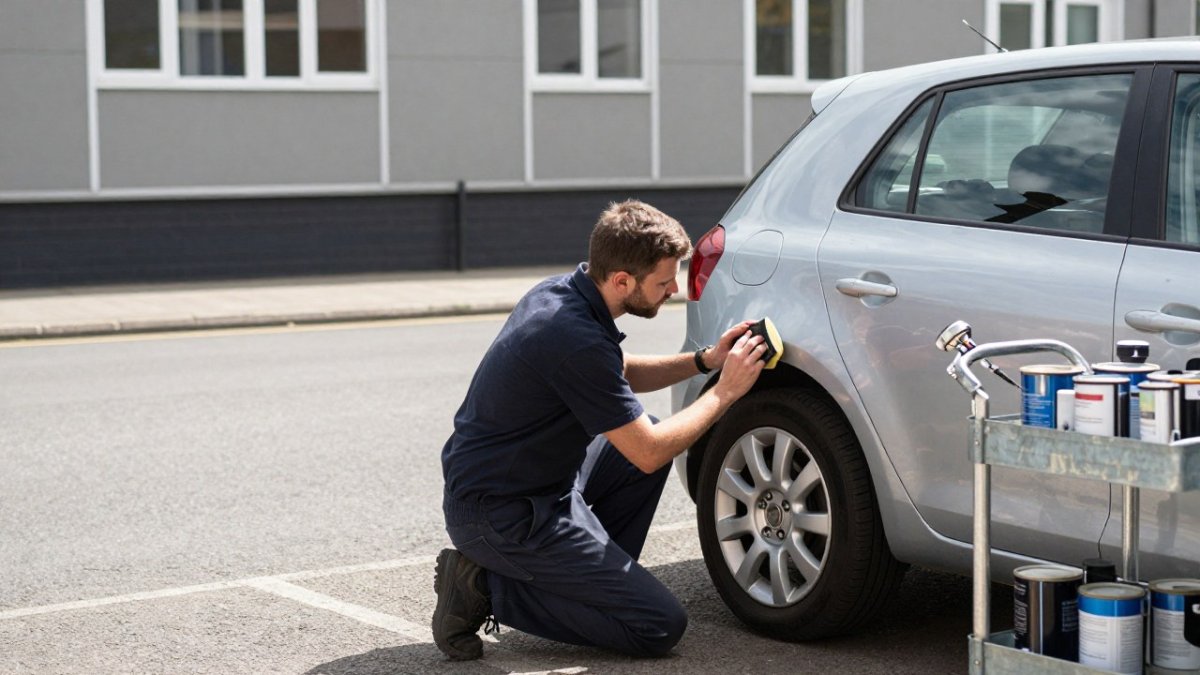
For bodywork, mobile specialists can handle bumper scuffs, scratches, dents and alloy wheels, typically completed in one to three hours.
Work that needs a workshop or a dealer
Some jobs cannot be done safely or properly in a car park, such as structural damage and jobs requiring a ramp or specialist equipment. These should go to a workshop.
A reputable mobile provider should tell you at the quote stage if your job falls outside what can be done on site.
How long common jobs take
Timings vary by vehicle and condition. Cosmetic SMART repairs are typically completed in one to three hours. Ask the provider to confirm the expected duration when you book, so you can plan access to the bay and the keys around your working day.
Checking Permission and Site Rules Before You Book
Before you book, confirm that your employer allows a repair van on the site. Many offices, depots and business parks have rules about contractors, vehicle access and working hours. A short email to facilities or your line manager is usually enough to get a yes.
Ask specifically about:
- Access for a van through gates and barriers, and whether a visitor pass or prior notice is needed
- Parking space for the van and the car being repaired, including whether the bay must be reserved
- Working hours and any restrictions on noise or activity during business hours
- Insurance and liability, so the site owner knows a contractor is on the premises
- Waste and cleaning rules, particularly for the disposal of paint residue and abrasives
Watch out: do not assume that a car park is a public space where any contractor can work. Many private sites require written approval, and a repair started without it can end the appointment on the spot.
Preparing Your Car and Your Workplace for the Appointment
Good preparation shortens the appointment, improves the finish and reduces the chance of the visit being called off. A workplace repair involves site rules and safety considerations that are worth planning for in advance.
A practical preparation checklist
Work through this list the day before and again on the morning of the appointment:
- Confirm the booking, arrival time, expected duration and the technician's mobile number
- Reserve a bay, a standard parking space in open light, close to where the van can park
- Check access, gate codes, barrier passes, visitor sign-in and any contractor induction
- Notify facilities or reception, so the technician is expected and can be directed to the right bay
- Clear the car, remove valuables and personal items, and leave the keys accessible
- Wash the damaged area, so the technician can see the true extent of the marks
- Note symptoms, warning lights, noises, leaks or handling changes, and any recent repairs or paintwork
- Check payment terms, confirm the quote, what is included and how payment is taken
Safety and environmental constraints
A mobile technician needs a level, safe working area with enough room to open doors, use jacks and axle stands, and keep clear of passing traffic. Busy car parks, tight multi-storey levels, sloping bays and areas near pedestrian routes may be unsuitable for anything beyond cosmetic work. If the job involves lifting the car, the technician will assess the ground and may decline the location.
Environmental rules also apply. SMART Automotive practises environmentally responsible waste disposal.
Watch out: do not assume a car park is a public space where any contractor can work. Many private sites require written approval, and a repair started without it can end the appointment on the spot.
What to have ready on the day
Keep the car keys and the provider's contact number to hand. Let colleagues know where the van will be parked and ask them to leave the bay clear. If the weather turns, a covered but well-lit location is better than an exposed bay, provided it still meets the safety requirements above.
The checklist below summarises the steps to complete before the technician arrives.
| Step | What to do | Timing |
|---|---|---|
| Confirm the booking | Check arrival time, expected duration and technician's number | Day before and morning of |
| Reserve a bay | Standard space in open light, close to the van | Before the appointment |
| Check access | Gate codes, barrier passes, visitor sign-in | Day before |
| Notify facilities or reception | Tell them the technician is expected | Before the appointment |
| Clear the car | Remove valuables, leave keys accessible | On the day |
| Wash the damaged area | Lets the technician see the true extent of marks | On the day |
| Note symptoms | Warning lights, noises, leaks, handling changes | Before the appointment |
| Check payment terms | Confirm quote, inclusions and how payment is taken | Before the appointment |
Using Mobile Repairs for Fleet Vehicles on a Company Site
Fleet managers can arrange repairs for several vehicles on one site, reducing the time vehicles spend away from service.
Set up a simple process: list the vehicles and their damage, agree a site visit date, and confirm access for the whole day in advance. Keep a record of each repair, including the date, the work carried out and any follow-up needed. This makes it easier to show the work was done and to track costs across the fleet.
Fleet cars are often in heavy daily use, so quick repairs matter. Ask the provider about their guarantee before committing to a larger programme.
When a Mobile Repair Is Not the Right Choice and What to Do Next
A mobile repair is not the right answer for every problem. If the damage is structural, if a warning light is showing, or if the car has been in a collision that may affect safety systems, take it to a qualified workshop or a dealer first.
If a mobile repair is unsuitable, ask the technician to explain why. A good specialist will say so plainly and suggest the next step, whether that is a bodyshop referral or a dealer inspection. For end-of-lease cars, check with the leasing company before the return date, since their requirements on wear and damage can differ from one provider to another.
Booking Your Workplace Repair With SMART Automotive
If your damage is cosmetic and your site allows a visit, SMART Automotive can carry out the repair at your workplace. The team provides mobile repairs at home or work, usually completing jobs in one to three hours, and offers a lifetime bodywork guarantee.
Start by getting a free quote, and the team aims to respond the same day.
Frequently Asked Questions
Can a mobile mechanic repair my car at work?
Yes, for many cosmetic jobs. Mobile technicians can carry out bumper scuff repair, scratch and dent repair and alloy wheel refurbishment in a workplace car park, provided the technician can get the vehicle to a suitable spot with enough space to work. Mechanical repairs that need lifts, specialist diagnostic equipment or major parts replacement usually still need a workshop. Ask the provider what they can complete on site before you book, so you know what to expect on the day.
Do I need permission to have my car repaired at work?
In most cases you should ask your employer or the car park operator first. Some sites have rules about contractors, insurance, access hours or working in parking bays, and a technician needs somewhere safe to set up. A short email to your line manager or facilities team, stating the date, time and the type of work, usually settles the question.
How long does a workplace cosmetic repair take?
Many minor cosmetic repairs, such as a bumper scuff or a small door dent, are completed in around 1 to 3 hours, so they can often fit into a lunch break or a single block of the working day. Larger jobs or several panels will take longer. Confirm the expected duration when you book and mention any fixed meetings so the timing can be planned around them.
Can a mobile repair service work on several fleet vehicles at one site?
Yes. Fleet managers can arrange for several vehicles to be repaired in one visit, which reduces downtime. Provide a list of vehicles, their registrations and the repairs needed, and agree a schedule in advance so each car can be released back to drivers as it is finished. A single site visit can cover a group of vehicles if there is enough space and access for the technician.
