
Table of Contents
- Mobile Alloy Wheel Repair in Southampton: What You'll Need
- Step 1: Alloy Wheel Damage Assessment Before Any Repair
- Step 2: Diamond Cut Alloy Wheel Repair Explained
- Step 3: How Long Does Alloy Wheel Repair Take?
- Step 4: Alloy Wheel Repair Cost and What Affects It
- Common Mistakes to Avoid When Booking Alloy Wheel Repair
- Conclusion
- Frequently Asked Questions
Last Updated: October 18, 2026
Mobile Alloy Wheel Repair in Southampton: What You'll Need
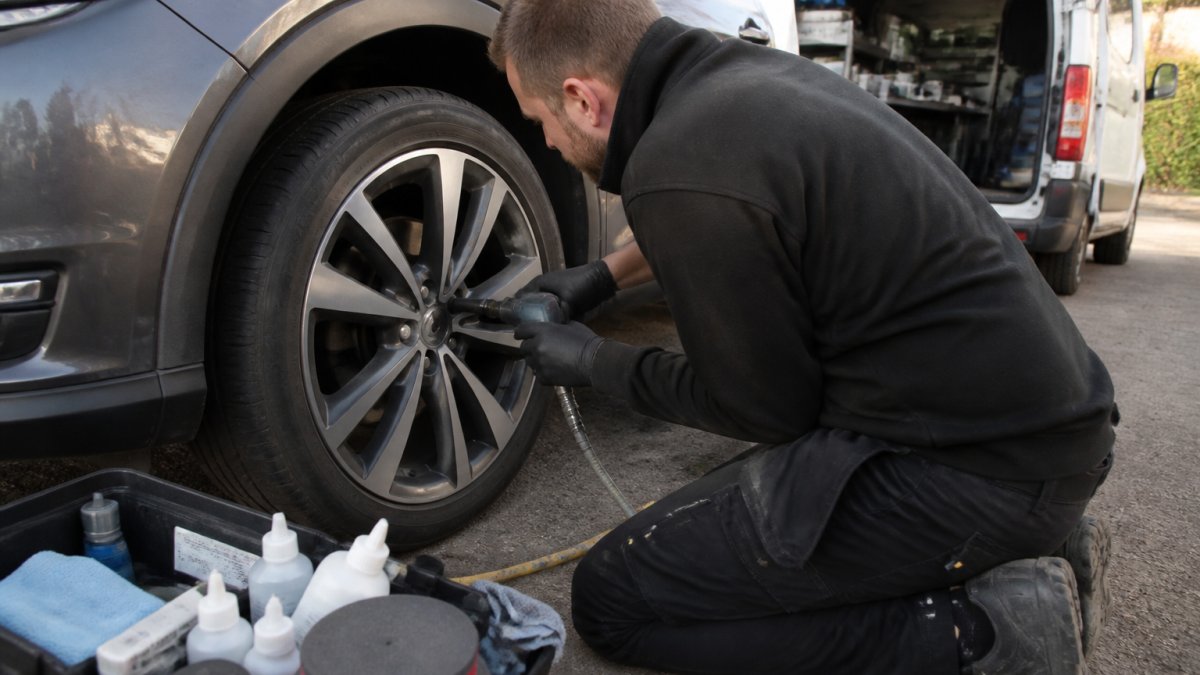
Kerb rash is the most common cosmetic complaint we see on Hampshire driveways, and it rarely needs a bodyshop. Mobile alloy wheel repair in Southampton is a same-day, on-site service that restores scuffed, kerbed and lightly buckled wheels without your car leaving your home or workplace. At SMART Automotive, we have built our mobile service around one idea: most wheel damage is cosmetic, so it should be fixed where the car sits, in hours rather than days. Below, we walk through exactly how the process works, what it costs and what affects the price, so you can judge whether it suits your car before you book anything. The whole job usually takes between one and three hours per wheel.
Step 1: Alloy Wheel Damage Assessment Before Any Repair
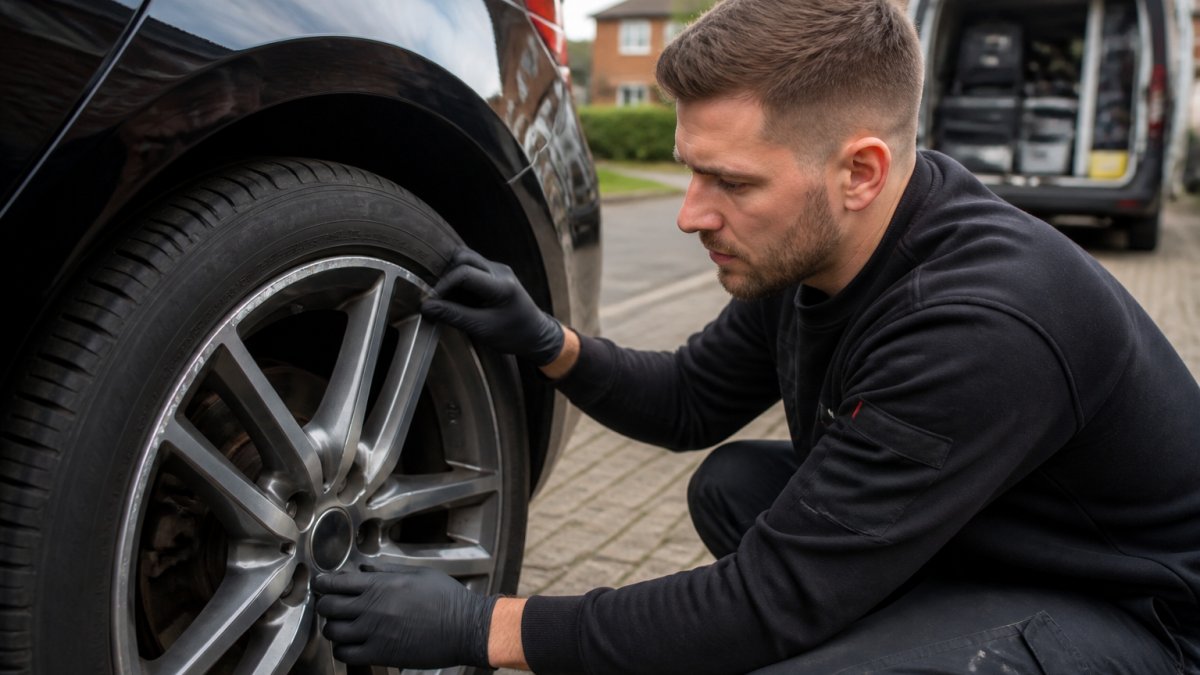
Every job starts with an alloy wheel damage assessment, and it is the step that determines whether a repair is even possible. A technician inspects the wheel under proper light, checks the depth of the damage, runs a hand around the rim to feel for distortion, and looks for cracks at the spoke roots. Cosmetic damage gets repaired on the spot. Structural damage gets flagged honestly, because a cracked or badly distorted wheel is a safety issue and no amount of refurbishment fixes it.
Kerb Rash, Scuffs and Buckling: What Can Be Fixed
Three types of damage account for almost every call we take, and they are not equal:
- Kerb rash: grazed metal and lacquer along the rim edge. Almost always repairable.
- Scuffs and gouges: deeper marks from kerbs or car park pillars. Usually repairable if the metal is not fractured.
- Buckling: a bent rim, often from potholes. Sometimes repairable, but it needs proper assessment first.
A common mistake is booking a cosmetic repair on a wheel that is losing air. If a tyre keeps deflating, get the wheel checked for cracks before anything else.
Step 2: Diamond Cut Alloy Wheel Repair Explained
Diamond cut alloy wheel repair is a specialist process, and it is where a lot of mobile services quietly decline the job. Diamond cut wheels have a machined metal face under a clear lacquer, so the repair involves stripping the lacquer, re-machining the face on a lathe to a precise finish, then re-lacquering. It cannot be done convincingly with a brush and a rattle can.
We handle diamond cut finishes properly rather than telling you to replace the wheel. The trade-off is time: a diamond cut refurbishment is not a fifteen-minute driveway job, so expect it to take longer than a standard painted-wheel repair. If a company promises a diamond cut finish in under an hour, ask exactly how they are achieving it.
Step 3: How Long Does Alloy Wheel Repair Take?
Alloy wheel repair time depends on the damage and the finish, but most mobile repairs are completed in one to three hours. A single kerbed wheel with a painted finish is at the quick end. Diamond cut work, multiple wheels, or a buckled rim pushes it toward the longer end. The practical advantage of mobile work is that the clock starts when the technician arrives, not when you drop the car off and wait for a slot.
For fleet managers, that difference matters more than the price. A van off the road for a day costs more than the repair itself. Booking a mobile visit at your depot or office car park means the vehicle is back in service the same day.
Step 4: Alloy Wheel Repair Cost and What Affects It
Alloy wheel repair cost varies with four things: the size of the wheel, the type of finish, the number of wheels, and how deep the damage goes. A painted finish on a single wheel sits at the lower end; diamond cut work and multi-wheel jobs cost more because they take longer and use more materials. Request a free quote for an accurate price.
For context on what a repair is competing against, the DVSA guidance on vehicle safety standards is worth a read, and the Institute of the Motor Industry sets the professional standards technicians should be working to. Most cosmetic wheel repairs cost less than a typical insurance excess, which is why paying privately often makes more sense than claiming.
| Damage Type | Typical Time | Repair Approach |
|---|---|---|
| Light kerb rash | 1-2 hours | Strip, fill, paint, lacquer |
| Deep scuff or gouge | 2-3 hours | Build up metal, refinish, blend |
| Diamond cut face | Longer session | Strip, re-machine, re-lacquer |
| Buckled rim | Assessment first | Straighten or advise replacement |
Common Mistakes to Avoid When Booking Alloy Wheel Repair
The biggest mistake is choosing on price alone and discovering the finish does not match. A cheap repair that looks wrong up close is money wasted, and on a lease car it can still trigger a charge at handback. Ask what guarantee covers the work and get it in writing.
Second, do not assume every mobile service handles diamond cut wheels. Many do not, and some will simply advise replacement because it is easier for them. Third, do not leave kerb damage until the end of a lease. Sorting it early spreads the cost and avoids a last-minute scramble before inspection.
Finally, check who is actually doing the work. Qualifications and accreditation tell you more about the finish you will get than a shiny van does. Our own technicians are IMI qualified, and we work to ISO 9001, 14001 and 27001 standards, which is the kind of detail worth asking any provider about.
Conclusion
Wheel damage is one of those jobs that feels bigger than it is, and the right mobile service turns it into a couple of hours on your driveway. The key is an honest assessment up front, a proper finish on diamond cut work, and a clear price before anyone starts. If you want that handled at your home or workplace, get a free quote from SMART Automotive. We come to you, complete most repairs in one to three hours, back our bodywork with a lifetime guarantee, and dispose of waste responsibly. Get started with SMART Automotive and have your wheels looking right again this week.
Frequently Asked Questions
How does mobile alloy wheel repair work?
A technician arrives at your home or workplace with a fully equipped van and repairs the wheel on the vehicle. The damage is assessed first, then the wheel is cleaned, stripped back, filled and refinished to match the original finish. Most kerb rash and scuffs are completed in one visit, usually within 1 to 3 hours depending on the wheel and finish type.
Can diamond cut alloy wheels be repaired by a mobile service?
Yes, diamond cut alloy wheel repair can be carried out on site, though it takes longer than a painted finish because the face has to be re-machined and lacquered. Not every mobile provider offers it, so confirm before booking. Ask whether the lacquer used is suitable for the wheel's original finish and how long the company guarantees the result.
How much does mobile alloy wheel repair cost?
Alloy wheel repair cost depends on wheel size, the type of finish and how much damage there is. Diamond cut and split-rim wheels cost more than standard painted alloys because of the extra machining work. Most repairs are priced below a typical insurance excess, but exact figures vary. Request a free quote with photos of the damage for an accurate price.
How long does mobile alloy wheel repair take?
Alloy wheel repair time is usually 1 to 3 hours per wheel for standard painted finishes. Diamond cut repairs take longer, often half a day or more, because the face is re-machined and re-lacquered. If several wheels need work, the technician may book a longer slot or return the next day. Ask for a time estimate when you book.